05/12/2026

The political epic of a defiant woman in the light of national and Int'l leadership
Dr. Mohammad Faiz Uddin MBE | Published: 2025-12-02 19:36:48
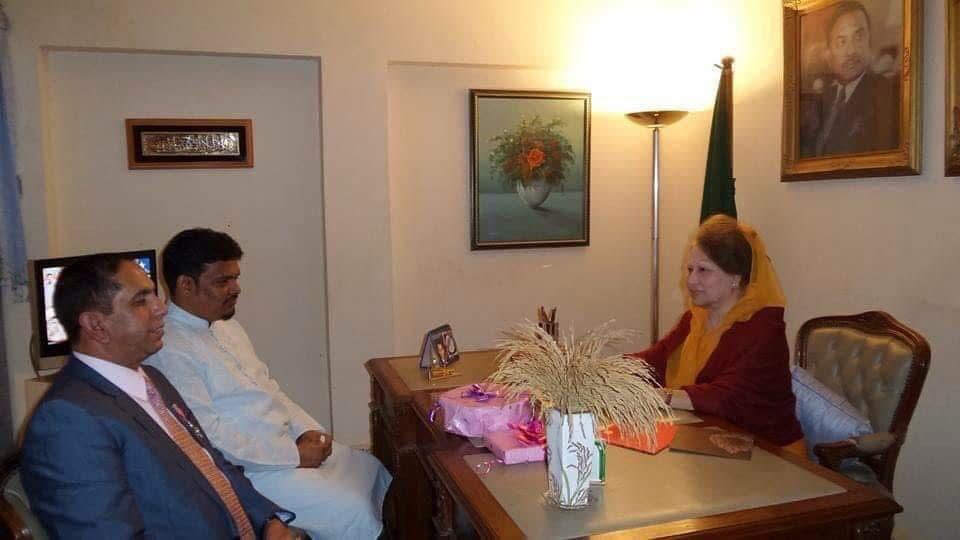
Among the most discussed and influential political figures in Bangladesh’s post-independence history, Begum Khaleda Zia stands as a prominent name. She is not only a defining figure in Bangladesh’s political landscape but also an iconic presence in the history of women’s leadership in South Asia.
From a traditional housewife to a stateswoman, her rise, her three terms as Prime Minister, years of political struggle, imprisonment, and her current state of frailty together form an indelible chapter in the nation’s political history.
This article presents a comprehensive narrative of her journey—from homemaker to political leader, her rise to international prominence, imprisonment, post-release reality, and the contemporary context surrounding her role.
From Housewife to Politics: A Dramatic Transformation in History
As the wife of President Ziaur Rahman, Begum Zia’s life was centered around domestic responsibilities—family, children, and a private household sphere. She did not begin as a political figure by nature or intention. But the assassination of President Ziaur Rahman in 1981 changed the entire direction of her life. Personal grief, state-level instability, and a political vacuum compelled her to step forward into national politics.
The BNP faced a leadership crisis during this period. Emotional attachment to her husband’s ideology, the party’s dire need for leadership, and the call of committed activists gradually transformed her from a quiet homemaker into a determined national leader.
This transformation is not only significant in Bangladesh’s political history but stands as a landmark in the evolution of women’s leadership in South Asia.
Rise to National Leadership: Three-Term Prime Minister and Political Resolve
Begum Khaleda Zia became the first woman Prime Minister of Bangladesh. With the BNP’s victory in the 1991 election, her first term began. She later assumed office again in 1996 and 2001. Under her leadership:
> Multiparty parliamentary democracy was restored
> Economic reforms advanced
> Diplomatic relations expanded and
> Regional cooperation initiatives strengthened.
Her ability to maintain organisational stability, unite her party under difficult circumstances, and assert Bangladesh’s position internationally demonstrated her political courage and conviction. Her name is often cited as one of the defining examples of women’s leadership in South Asian politics.
Begum Zia on the Global Stage: A Distinct Diplomatic Presence
As Prime Minister, she played an active role in regional cooperation, especially within SAARC. Her diplomatic recognition expanded rapidly among international development agencies, neighbouring states, and global policymakers.
Experts note that:
> She maintained a confident and assertive presence in international forums
> Demonstrated success in building multilateral relations and
> Earned appreciation for her ability to secure development partnerships
She was not merely the head of government of Bangladesh; she became a significant symbol of women’s leadership across South Asia.
Imprisonment: The Most Difficult Chapter of Her Political Life
In 2018, following a court verdict, Begum Zia was sent to prison. This became the most dramatic and challenging phase of her political career. Legal controversies, political tensions, and widespread national debate turned her imprisonment into a central issue in national discourse.
Her health deteriorated while in prison. Age-related complications and the need for long-term medical attention created a new reality. On humanitarian grounds, the government later suspended her sentence and allowed treatment at home.
Her time in prison was marked by severe mental stress, intense physical suffering and the need to maintain calm amidst political turmoil.
Though this phase challenged her politically, her symbolic authority within the BNP and among supporters remained unwavering.
Post-Release Reality: Silence, Treatment, and Symbolic Leadership
After her release, she has not been able to participate actively in politics due to deteriorating health. Her life is now centered around hospital care, treatment, and rest. Yet she remains the moral and symbolic nucleus of the BNP.
Observers note that:
Even in her absence, the party draws strength from her name,
Her decades of struggle inspire the organisation,
Her legacy continues shaping party dynamics,
And her silence itself creates political narratives.
SWOT Analysis: A Neutral Assessment of Begum Zia’s Political Reality
S – Strength
1. Experience as a three-term Prime Minister
2. Longstanding acceptance as party leader
3. Central figure of nationalist politics
W – Weakness
1. Severe health complications limit political activity
2. Long absence from active politics
3. Restricted involvement in strategic party decisions
O – Opportunity
1. Her international human rights profile can strengthen the BNP globally
2. Her legacy inspires emerging leadership
3. Her political heritage remains significant in rebuilding the party
T – Threat
1. Health complications pose the greatest uncertainty
2. Internal pressure for leadership transition
3. Persistent challenges from political opponents
Current Situation: A Reflection of Strength Within Silence
Today, Begum Khaleda Zia remains almost entirely detached from active politics due to critical health issues. She relies on hospital and home-based medical care. Yet she continues to be a central figure in political conversations across the nation. The mere mention of her name still generates political heat.
She stands as a silent symbol of organisational unity, nationalist politics, democratic movement and a defining era of Bangladesh’s political evolution.
Conclusion
Begum Khaleda Zia’s political journey is not merely a personal story—it is an essential chapter of Bangladesh’s political history. From homemaker to national leader, from a prominent presence in international diplomacy to the darkest moments of imprisonment, and now a silent but powerful political symbol—each phase of her life represents a distinct struggle.
Though physically weakened today, she remains politically significant—a symbol, a history, a lasting chapter that will continue shaping the political landscape of future generations.
The author is a prominent columnist, human rights organizer, international researcher and political analyst, and the chairman of New Hope Global, based in Birmingham, UK.
Editor & Publisher : Md. Motiur Rahman
Pritam-Zaman Tower, Level 03, Suite No: 401/A, 37/2 Bir Protik Gazi Dastagir Road, Purana Palton, Dhaka-1000
Cell : (+88) 01706 666 716, (+88) 01711 145 898, Phone: +88 02-41051180-81