05/19/2026

Growing Concern: Garment sector in conflict crisis
Special Correspondent | Published: 2026-01-24 22:11:58
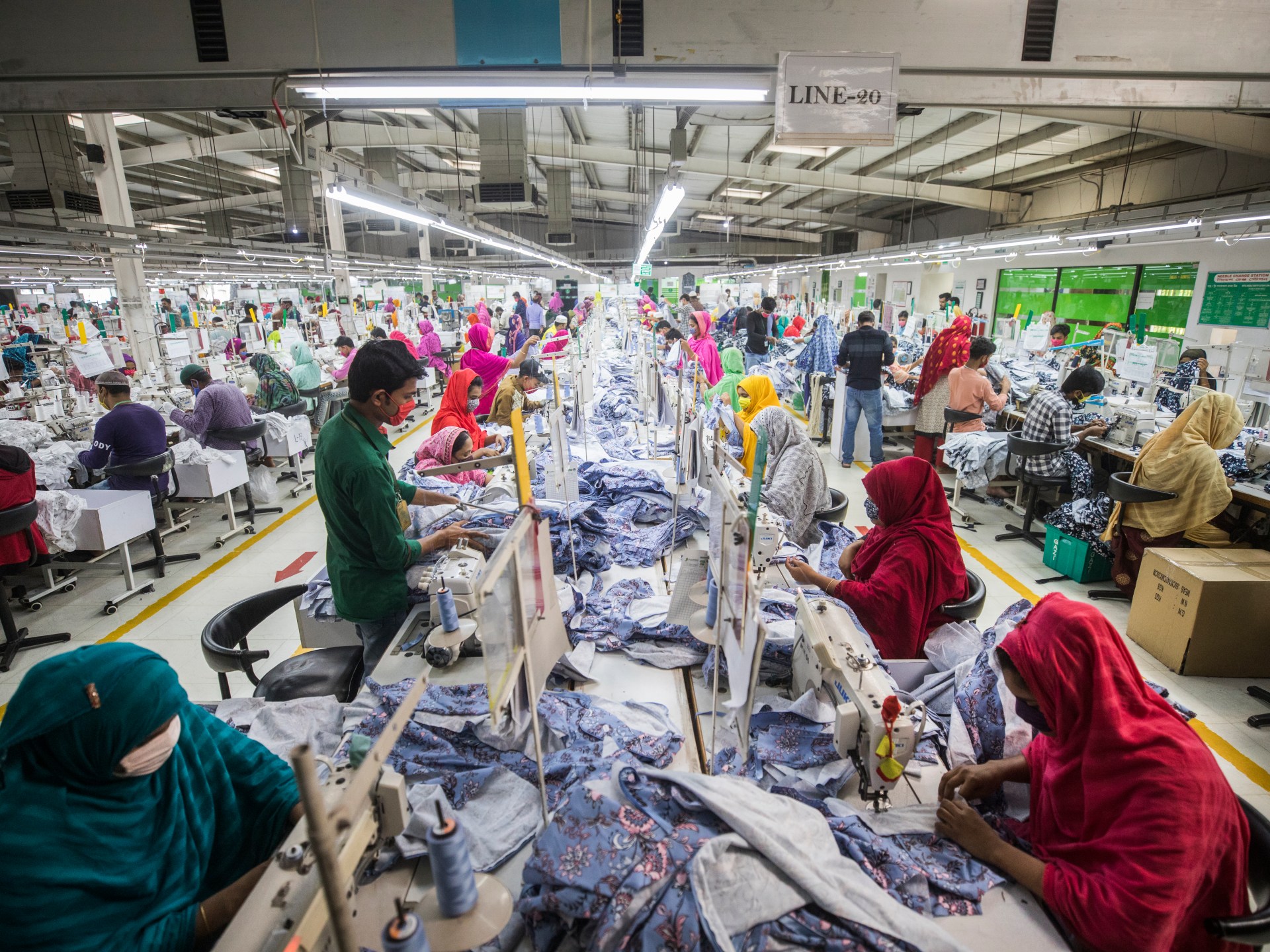
Country’s three top garment-sector organisations have come face to face over the issue of imposing duties on yarn. Because of this internal conflict, the sector is at risk of an image crisis in the eyes of customers or buyers.
Over the past five months, Bangladesh’s garment exports to 26 countries around the world have declined compared to earlier levels. The internal crisis over yarn could damage the sector’s image.
Knit garment entrepreneurs say that if duties are imposed, garment prices will increase, and as a result buyers will place orders with other countries. If imports are restricted in an effort to protect spinning mills, the knitting, dyeing, and garments sectors will be put at risk.
On the other hand, textile-sector entrepreneurs say that, for various reasons, 50 factories have already shut down and around BDT 12,000 crore worth of yarn remains unsold in textile mills. To protect textile factories, they argue, the bonded facility for yarn should be withdrawn.
It is learned that on December 29, the Bangladesh Textile Mills Association (BTMA) sent a letter to the Bangladesh Trade and Tariff Commission demanding either a 20 percent safeguard duty or the withdrawal of bonded facilities on the import of 10–30 count cotton and blended yarn, in order to reduce imports from India.
In response to BTMA’s letter, the Tariff Commission held a meeting with the association’s leaders on January 5.
The very next day, the Tariff Commission sent a recommendation to the Ministry of Commerce to exclude 10–30 count yarn imports from bonded facilities.
Objecting to this process, the Bangladesh Garment Manufacturers and Exporters Association (BGMEA) and the Bangladesh Knitwear Manufacturers and Exporters Association (BKMEA) sent separate letters to the Tariff Commission on January 6. The Tariff Commission then held a meeting with all parties on January 8.
At the meeting, leaders of BGMEA and BKMEA opposed the imposition of duties on yarn imports. As a result, the meeting ended without any decision. On January 12, the Ministry of Commerce recommended to the National Board of Revenue (NBR) the withdrawal of bonded facilities on the import of 10–30 count cotton yarn.
This recommendation to withdraw bonded facilities on cotton yarn imports from India and other countries has once again created instability in the ready-made garment and textile sectors.
BTMA President Showkat Aziz said that multiple formal meetings have been held between garment-sector entrepreneurs and various government institutions and officials. Earlier, in informal meetings, leaders of BTMA, BGMEA and BKMEA had agreed in principle, in the interest of domestic industry, that yarns which can be produced 100 percent locally could be excluded from bonded facilities.
BKMEA President Mohammad Hatem said that the uncertainty created over yarn imports is confusing foreign buyers. Because of this dilemma, they may be discouraged from placing new orders in Bangladesh, which would damage the long-term brand image of the country’s garment sector. To solve this problem, he said, it is necessary to understand why spinning mills’ yarn remains unsold.
He further said that among all competing countries in the garment industry, Bangladesh is in the most disadvantageous position. Due to the absence of a deep-sea port, it takes Bangladesh 15–20 days longer than competing countries (China, India, Pakistan, Vietnam, Cambodia, Sri Lanka) to deliver products. It takes about a week just to move goods from factories onto ships. From here, goods go to Singapore, then onto feeder vessels, and from there onto mother vessels.
As a result, compared to other countries, Bangladesh’s lead time is at least 15 to 20 days longer. While a worker in Vietnam produces 320 pieces per hour, a Bangladeshi worker’s production capacity is 230 pieces per hour. In addition, gas and electricity prices are higher, and interest rates are high. Despite all these disadvantages, the fact that Bangladesh is still surviving in competition is itself a major achievement.
Editor & Publisher : Md. Motiur Rahman
Pritam-Zaman Tower, Level 03, Suite No: 401/A, 37/2 Bir Protik Gazi Dastagir Road, Purana Palton, Dhaka-1000
Cell : (+88) 01706 666 716, (+88) 01711 145 898, Phone: +88 02-41051180-81