06/06/2026

Early marriage, teenage pregnancy common among female garment workers: Study
Staff Correspondent | Published: 2026-06-06 14:39:21
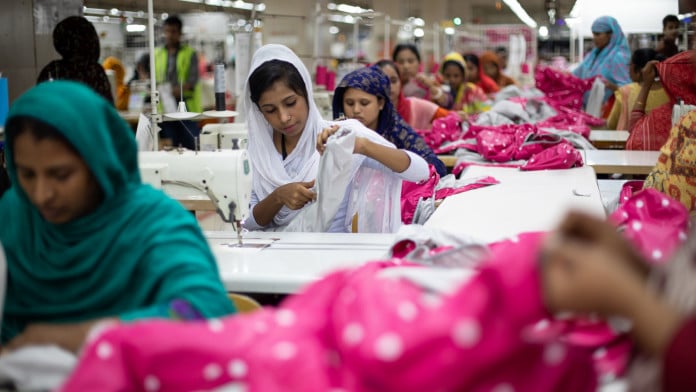
A study conducted by icddr’b has found that nearly 65 percent of female garment workers become pregnant before reaching the age of 18, highlighting widespread early marriage and reproductive health challenges among women employed in Bangladesh’s garment sector.
Fourteen-year-old Rukhsana Akter(pseudonym) from Kishoreganj came to Dhaka in 2023 in search of work at her aunt’s house. She hoped to earn money and send financial support to her parents in the village. She later found employment at a small garment factory in Mirpur.
However, within a year, she married to a co-worker at the factory. At just 16 years old, Rukhsana became pregnant with her first child.
Rukhsana’s story reflects the experiences of thousands of garment workers who marry before the age of 18 and become mothers during adolescence.
According to an icddr,b study published in September last year, around 65 percent of women working in the garment industry become pregnant before turning 18.
The study report said one in every three women workers experienced at least one unintended pregnancy in their lifetime, while one in four had undergone abortion or menstrual regulation.
The research was conducted over a 24-month period from August 2022 to December 2024.
The study was carried out in areas covered under icddr,b’s Urban Health and Demographic Surveillance in Korail and Mirpur slums in Dhaka and Tongi slum in Gazipur. The focus of the research was the sexual and reproductive health and rights of female garment workers.
According to the study, surveys were conducted every six months involving 778 female garment workers aged between 15 and 27 years employed in ready-made garment factories.
The findings showed that two out of every three women workers in the garment sector were married before completing 18 years of age.
The study also found that awareness regarding long-term family planning methods among participating women workers was 49 percent at the beginning of the survey.
After two years of follow-up, the awareness level increased to 70 percent. During the same period, awareness regarding emergency contraceptive pills or tablets also increased significantly.
Initially, only 15 percent of women knew about emergency contraceptives, which later rose to 39 percent. Positive attitudes toward giving importance to mutual opinions between husband and wife in family matters also increased from 54 percent to 71 percent during the same period.
The study revealed a high rate of violence by husbands against female workers. Mental violence in the workplace was also widely found among them. At the beginning of the study, around 48 percent of female garment workers experienced psychological violence in the workplace, which increased to 55 percent after two years.
Most women subjected to violence did not seek formal assistance. Initially, 35 percent of women sought informal support from family members or friends, but the rate declined to 21 percent after two years.
The study noted that although some counselling services related to sexual and reproductive health exist in Bangladesh’s garment factories, the supply of necessary services remains limited.
Among the factories where surveyed workers were employed, only 22 percent provided sanitary pads, while just 14 percent supplied family planning materials.
According to the findings, women workers who had received at least nine years of institutional education and married at a comparatively older age faced lower risks of teenage pregnancy between the ages of 15 and 19. Women who began using contraceptives before conceiving were found to have a 47 percent lower risk of teenage pregnancy.
Researchers observed that violence by husbands affects women’s empowerment.
They believe that greater decision-making power among women can help protect them from psychological and sexual violence, while freedom of movement can reduce the risk of physical violence.
Human rights activist Advocate Monowara said women are now working not only in garment factories but also in many other sectors. However, regardless their work places, unintended pregnancies must be reduced.
She stressed the need to enhance workers’ knowledge and raise awareness.
Editor & Publisher : Md. Motiur Rahman
Pritam-Zaman Tower, Level 03, Suite No: 401/A, 37/2 Bir Protik Gazi Dastagir Road, Purana Palton, Dhaka-1000
Cell : (+88) 01706 666 716, (+88) 01711 145 898, Phone: +88 02-41051180-81