Bangladesh Strengthens Its Global Peace Legacy Through UN Peacekeeping
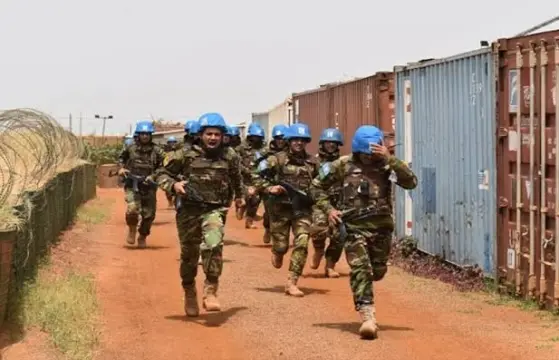
Guided by the painful lessons of the 1971 Liberation War and a foreign policy centred on cooperation rather than confrontation, Bangladesh continues to play a pivotal role in promoting peace and protecting vulnerable populations across the globe
Bangladesh has firmly established itself as one of the world's foremost contributors to United Nations peacekeeping operations, a distinction rooted in the nation's hard-earned history, constitutional ideals and unwavering commitment to international peace.
Guided by the painful lessons of the 1971 Liberation War and a foreign policy centred on cooperation rather than confrontation, Bangladesh continues to play a pivotal role in promoting peace and protecting vulnerable populations across the globe.
The scars of the Liberation War—marked by genocide, mass displacement and one of the gravest humanitarian crises of the twentieth century—have profoundly shaped Bangladesh's national consciousness. Having experienced the devastating human cost of armed conflict firsthand, the country has embraced peacebuilding and humanitarian protection as enduring national priorities.
This commitment is enshrined in the Constitution of Bangladesh, whose preamble pledges the country's "full contribution towards international peace and co-operation." That constitutional principle continues to guide Bangladesh's diplomatic engagement, encouraging the peaceful resolution of disputes, multilateral cooperation and active participation in international efforts to strengthen global peace and security.
As United Nations peacekeeping operations have evolved, the protection of civilians has emerged as their defining mandate. This mission closely aligns with the professional values of the Bangladesh Armed Forces, where humanitarian responsibility is regarded as an integral component of military professionalism. Consequently, Bangladeshi peacekeepers have earned widespread international respect for their discipline, integrity, operational excellence and unwavering dedication under challenging circumstances.
Bangladesh's peacekeeping journey began in 1988 with the deployment of 15 military observers to the United Nations Iran-Iraq Military Observer Group (UNIIMOG). The Bangladesh Police joined UN peacekeeping missions in 1989, while the Bangladesh Navy and Bangladesh Air Force became part of the initiative in 1993. Since then, Bangladesh has participated in 63 UN peacekeeping missions and assignments across approximately 43 countries and territories.
Over the past three decades, more than 206,000 members of the Bangladesh Armed Forces have served under the UN flag, making Bangladesh one of the world's largest and most reliable troop-contributing countries. Currently, around 4,177 Bangladeshi military and police personnel are deployed in nine UN peacekeeping missions worldwide, continuing the country's longstanding commitment to international peace and stability.
Beyond enhancing Bangladesh's global reputation, participation in UN peacekeeping has significantly strengthened the operational capabilities, professionalism and institutional capacity of the country's armed forces and law enforcement agencies. The experience gained from complex multinational missions has improved interoperability, leadership, logistics and crisis-response capabilities, benefiting Bangladesh's national defence preparedness.
Speaking at a discussion titled "The Contribution of Bangladeshi Peacekeepers to Global Peace" held at the CIRDAP auditorium on June 8, State Minister for Foreign Affairs Shama Obaed Islam paid tribute to the courage and professionalism of Bangladeshi peacekeepers serving in some of the world's most volatile conflict zones.
"Bangladeshi peacekeepers continue to risk their lives for global peace while upholding the honour of the nation," she said.
Reflecting on her participation in international forums, particularly in Africa, the state minister observed that many people around the world remain unaware of Bangladesh's extraordinary contribution to UN peacekeeping.
"They risk their lives for a cause greater than themselves," she remarked, describing Bangladesh's growing peacekeeping role as a cornerstone of the country's foreign policy.
She also acknowledged the sacrifices made by the families of peacekeepers, noting that behind every deployment lies a family willing to endure uncertainty in service of the nation.
"Every family sends their father, husband or brother on these missions without knowing whether they will return. Yet they continue to support them out of love for the country," she said.
The state minister further highlighted that much of the equipment and logistical support used during peacekeeping missions is financed by the United Nations, enabling Bangladesh to strengthen its own defence capabilities after mission completion. She emphasised the importance of continued investment in advanced training, modern equipment and force protection to ensure that Bangladeshi peacekeepers remain among the world's most trusted contributors to international peace operations.
With an exceptional record spanning more than three decades, Bangladesh has become synonymous with professionalism, resilience and humanitarian service in UN peacekeeping. As global conflicts grow increasingly complex, the country's steadfast commitment to protecting civilians, supporting fragile states and advancing international peace continues to reinforce its standing as a responsible global partner dedicated to a more secure and peaceful world.
Shamiur Rahman