
- Business /
- '600 'warehouses' floating in the sea by six Importers

Shamiur Rahman Lipu
Published:2026-01-29 12:04:54 BdST
Ahead of Ramzan; 'Masterplan' to release wheat, sugar, pulses and soybeans!'600 'warehouses' floating in the sea by six Importers
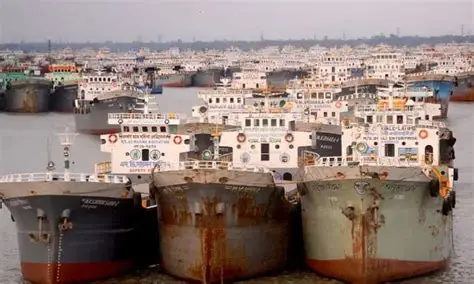
Ahead of Ramadan, about 600 lighter ships carrying more than 1 million tons of daily necessities from a large syndicate including six major importers of the country have been stuck in the country's rivers and seas for months as 'floating warehouses'.
Wheat, corn, chickpeas, pulses, soybeans and sugar brought down from the deep sea are floating on ships instead of landing at the wharf.
On the one hand, this has led to a severe crisis of lighter ships. On the other hand, there is a fear of shortage of products and increase in prices in the upcoming Ramadan.
A record 176 mother vessels or large ships are currently anchored at the outer anchorage of Chittagong Port. Of these, 61 ships are carrying essential food items like wheat, corn, chickpeas and soybeans. At least 110 mother vessels at the outer anchorage have already announced that they will not enter the port. These ships are supposed to load goods from the deep sea onto lighter ships and send them to various jetties and rivers in the country. But in reality, a large part is stuck in the lighters and they are practically turning into floating warehouses.
Floating warehouse occupied by six importers
According to relevant sources, the country's six major importers, Akij Group, Nabil Group, TK Group, Meghna Group, City Group and Bashundhara Group, have at least 600 lighter ships with about 1 million tons of goods afloat.
Of these, Akij Group alone has detained about 80 lighter ships, which contain fertilizer, bitumen, mustard, edible oil, wheat and sugar.
Nabil Group and Meghna Group are next in line in terms of detained lighters. Since the import volume of City Group and Bashundhara Group is comparatively low, their number of ships is also comparatively low.
While a lighter ship is normally supposed to unload its cargo within 15 days and be ready for its next trip, many ships are now serving as floating warehouses in rivers and oceans for 30 to 40 days. This is further increasing the shortage of lighters needed to unload new cargo.
Lighter crisis stalls, acquittals
Import pressure has increased ahead of Ramadan. Port sources said that as of January 15, a total of 108 cargo ships were waiting at the outer anchorage and Kutubdia Channel of Chittagong Port. These ships were carrying more than 4.5 million tons of goods. Of these, 17 ships carry about 1.2 million tons of Ramadan-related food products such as wheat, corn, soybeans, chickpeas, pulses and edible oil. Five more ships carry more than 200,000 tons of sugar. In addition, seven ships are carrying fertilizer and 25 ships are carrying cement clinker.
In normal times, a mother vessel with a capacity of 50,000 tons can complete its unloading via lighter ships in seven to 10 days. But currently, due to the lighterage crisis, the waiting time has increased to 20 to 30 days. Many ships are unable to unload any goods for days after days. Ships that were supposed to leave the port in 10 days are now waiting for 25 to 30 days.
There are currently 631 lighter ships stranded at 41 wharves across the country, of which 51 are engaged in transporting fertilizer imported by the government.
Most of the 1020 lighters are floating
About 1,020 lighter ships operate on the Chittagong line. Of these, at least 300 are either loading or en route to their destinations. The remaining 720 lighters are already loaded and floating in various rivers and seas.
In the list of 631 lighters received daily by Chittagong, 139 are from MST Marine Enterprise, 101 from Samata Shipping and Trading, 80 from Modern Logistics, 78 from TST Global Maritime, 61 from ANJ Trading, 51 from Hamidia Enterprise and 58 each from Kaderiya Enterprise and Green Traders.
Of these, there are at least 186 wheat-carrying ships, 127 of which are in the hands of Samata Shipping and MST Marine. There are at least 30 lentil-carrying ships, 17 of which are in the hands of Kaderiya Enterprises and Modern Logistics.
There are at least 60 corn-carrying ships, 30 of which are in the hands of Kaderiya Enterprises. There are at least 14 soybean husk-carrying ships and at least 11 soybean seed-carrying ships. There are at least 10 mustard-carrying ships, half of which are in the hands of ANJ Trading. The same company also owns 17 unrefined sugar-carrying ships.
Why Lighter Warehouse?
Sources said that earlier importers used to store goods in their own warehouses or rented warehouses. But for at least the last 10 years, there has been an increasing trend of storing goods by converting lighter ships into floating warehouses. The cost of storing goods in rented warehouses is comparatively less when stored in lighters. When goods are unloaded in warehouses, various government and private organizations keep stock accounts. This helps to know whether there is a product as per demand and makes it difficult to create an artificial crisis. But if stored in lighters, that account cannot be easily calculated. This allows the goods to be held back during times of demand and creates a crisis in the market, thereby increasing prices.
Concerned parties allege that it is planned to create a shortage of lighters by bringing in a large quantity of products at once before Ramadan. At the same time, importers are bringing in products and holding back lighters and waiting for a shortage to arise in the market. There are also allegations that they are also controlling the unloading schedule through clearing and forwarding agents during this time.
Large ships sit at outer anchorage for months on end
A large number of mother vessels, which arrived at the outer anchorage of Chittagong Port three months ago with daily necessities, are still sitting. On October 22 last year, 'Daria Dia' brought 36,172 tons of wheat from Australia. On November 4 last year, 'Limnos' brought 32,858 tons of raw sugar from Brazil. On November 15, 'Agia Fevronia' brought 35,893 tons of wheat from Singapore.
In December, wheat, corn, sugar and soybeans were brought from Ukraine, Brazil, Russia and Singapore by 'Telerig', 'Daria Sita', 'Gema', 'Langloa Fujimaru', 'Ocean Ang', 'Pacific Jasmine', 'Shin Hai Tong 68', 'Bunun Queen', 'Thetis', 'Belfortun', 'Josko Shunjo', 'Bel Tokyo' and 'Scorpios Island'.
This January, 'Wico Hall', 'Desert Challenger', 'Valkyrie', 'Spar Libra', 'Dube', 'Josko Liujo', 'AM Princess', 'Indigo SW', 'FJ Viola', 'Audrey SW', 'Clipper Isadora', 'Scumi 5', 'Felicia', 'Verigue', 'African Dipper', 'Theresa Bridge', 'Ince Kastamonu', 'Barge Namuli' and 'Pan Talisman' arrived at outer anchorage with wheat, corn, sugar, lentils and LPG from Brazil, Australia, Singapore, India, Argentina, Russia and Colombia.
Similarly, in December last year and January this year, 'Desert Virtue', 'Soteria', 'Sin Zeng Sea', 'Dubai Ocean', 'Draftdozer', 'Queen Trader', 'Alam Sayang', 'CS Cosmo', 'SE Marina', 'Bahri Seta', 'Obsession', 'Good Heart', 'Nord Agano', 'Red Diamond', 'Tomorrow', 'Atlantic Ocean', 'Common Horizon', 'Alberta' and 'HG Ravenna' are in the deep sea with wheat, corn, sugar, chickpeas and lentils.
Ministry orders evacuation of floating warehouses
In this situation, the Department of Shipping, in a letter sent to importers and their agents on Thursday (January 22), issued strict orders to unload lighter vessels that have been loaded with goods for more than 15 days.
The letter, signed by Commodore Shafiul Bari, Director General of the Department of Shipping, said that the number of mother vessels at the Chittagong outer anchorage has increased significantly in recent times. At the same time, some factories, groups of companies and importers are using lighter ships loaded with goods as floating warehouses instead of unloading them on time. This has led to a shortage of ships for transporting goods.
The letter said that due to the shortage of lighter vessels, there are not enough ships available to unload goods from mother vessels arriving in Bangladesh. This is hindering the unloading of imported goods and creating a risk of disruption to normal supply of goods. This could have an impact on the market of daily necessities and create the possibility of price increases.
In this context, groups of companies and importers including RB Agro Limited, Nabil Group, Noapara Traders, Shabnam Vegetable Oil Industries, Sheikh Brothers, Spectra Group and Akij Group, which have been using lighter ships as floating warehouses for more than 15 days, have been ordered to unload their goods immediately.
The letter states that the importers concerned must unload the goods and release the lighter ships within the next 5 working days on an urgent basis. If the instructions are not followed within the stipulated time, necessary legal action will be taken against the importers concerned.
Instructions, task force and fines
Sources in the Ministry of Shipping said that some big importers are using lighter ships as floating warehouses instead of unloading their goods within the stipulated time. As a result, more than 200 lighters are stuck and despite sufficient imports, supply in the market is being squeezed.
In a meeting with stakeholders on Tuesday (January 20), importers were ordered to unload the goods and release the detained lighters within five days. Failure to comply with the order resulted in strict action and criminal prosecution.
On Saturday (January 24), Director General of the Department of Shipping Commodore Md. Shafiul Bari said, "We are monitoring the situation. Task forces are already being formed under the leadership of executive magistrates in Khulna and Dhaka regions. Regular cases will be filed against those who deliberately delay the unloading of goods from lighter ships and use them as floating warehouses to stockpile goods and increase prices ahead of Ramadan."
He said, "Yesterday, we were able to allocate 80 lighter ships in one day."
Earlier, on Monday (January 19), the mobile court of the Department of Shipping in Muktarpur, Munshiganj fined two lighter ships, MV Siddique Ahmed-3 and MV RJ-1, Tk 35,000 each for using them as floating warehouses.
During the operation, 27 lighter ships carrying wheat, corn, gypsum and fly ash were inspected. Representatives of the importers of the goods on these ships, Nabil Group, Medina Group, SS Trading, N Mohammad, Shabnam and TK Group, were ordered to unload the goods as soon as possible.
Unauthorized use or reproduction of The Finance Today content for commercial purposes is strictly prohibited.