Lured to Laos, Sold to Myanmar: 200 BD migrants in captivity
The Hidden Truth Behind Multibillion-Dollar Scam Industry
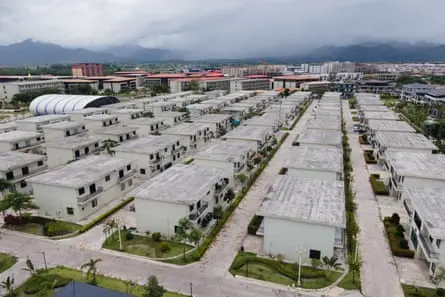
Bangladeshi survivors describe forced online fraud, prolonged captivity and brutal physical abuse inside heavily guarded compounds
Southeast Asia's lawless border zones host a highly coordinated human trafficking pipeline where victims are often lured by job offers to 5 ASEAN countries and subsequently sold like commodities to fortified scam centres in Myanmar. Primarily run by a transnational Chinese criminal syndicates; these industrial-scale operations fuel a multi-billion dollar global cyber-fraud empire.
The alleged trafficking route begins with deceptive recruitment for jobs in Laos and ends in heavily guarded compounds in Myanmar, where victims said that they are forced to conduct online fraud, including romance scams, cryptocurrency schemes and fraudulent investment operations. Earlier, the above mentioned organized crime was operated in Southeast Asia centering Vietnam, Cambodia and Malaysia.
More than 200 Bangladeshis are believed to be trapped in the same scam compounds in Myanmar after allegedly being lured abroad with fake job offers and trafficked through a regional criminal network.
Independent experts along with the country’s leading financial and investigative news portal named "The Finance Today" and "The Investor" has officially designated this escalating crisis a "humanitarian and human rights catastrophe".
Human rights groups estimate that approximately three thousand foreign nationals, including India, Nepal, Sri Lanka and Philippines remain trapped in lawless cyber scam compounds near Myanmar’s border with Thailand.
A joint investigation lead by "The Finance Today" experts and associated by 'The Investor;' reveals that these scam centres located mainly in the border regions such as Myawaddy and Karen State in Myanmar. FT Team also get some highly classified intels which indicates that local militias like the Democratic Karen Buddhist Army (DKBA) and Border Guard Forces operated these scam centres.
The FT team's investigation has gained momentum after the recent revelations about Amjad Hossain, who lost everything in the trap of a Laos-Myanmar-based human trafficking ring.
It is worth noting that "The Finance Today" has been investigating the human trafficking ring active in ASEAN countries Thailand, Vietnam, Cambodia and Laos since December, 2023.
Recently, detailed informations about the human trafficking syndicate's fraudulent activities, money laundering, forcing workers to involve in immoral activities and the horrific torture and persecution that Rajbari businessman Amjad Hossain suffered while protesting injustice abroad is being presented in this report by "The Finance Today".
A Story of Job Promise to Modern Slavery
Promised a computer operator’s job in Laos for Tk 350,000, Bangladeshi migrant Amzad Hossain was allegedly sold to a trafficking network, forced to impersonate women in online romance scams, and later transferred to a Myanmar scam compound where he endured beatings, electric shocks, food deprivation and up to 18 hours of forced labour a day.
For Amzad Hossain, the decision to seek work abroad was born out of desperation.
A businessman from Rajbari, Bangladesh, Amzad had suffered major losses in his business and accumulated nearly Tk 30 million in debt. With a wife and daughter to support, he hoped that a well-paid overseas job would help him repay his debts and rebuild his family’s life.
Instead, his search for employment allegedly led him into a transnational human-trafficking network and, ultimately, into a Myanmar scam compound where he says he was subjected to torture and forced to participate in online fraud.
He is now receiving medical treatment in Thailand, suffering from serious physical injuries, broken fingers and recurring loss of consciousness. His ordeal began with a promise of legitimate employment.
Tk 350,000 Bait: Deceptive Recruitment
Criminal syndicates mainly target tech-literate individuals globally, pulling in victims from Asia, Africa, and South America.
Amzad contacted HE Travel & Tourism, a recruiting agency in Nayapaltan, Dhaka, after being told that he would be employed in Laos as a computer operator. He was allegedly promised a good salary as well as accommodation and food. Trusting the offer, he paid the agency Tk 350,000.
Although he was initially told that he would be sent abroad within a month, he reportedly had to wait for nearly eight to nine months.
Eventually, on December 4, 2025, he travelled to Laos after obtaining a clearance from the Bureau of Manpower, Employment and Training (BMET). But upon arrival, the job he had been promised was nowhere to be found.
Dream changed upon arrival in Laos
In general scam cases; upon arrival in Laos, victims' passports are instantly confiscated. Many victims start their nightmare in the Golden Triangle Special Economic Zone (SEZ) in northwestern Laos.
This casino-choked, poorly regulated enclave acts as a massive processing and forced-labor hub. Trapped workers are crammed into heavily guarded dormitories and stripped of basic freedom.
For almost a month after arriving in Laos, Amzad says he had no contact with HE Travels. Later, two individuals identified as Amir and Sajjad allegedly took him to another organisation. It was there, he says, that he discovered the truth: he had not been recruited for a job but had allegedly been sold to another group.
Instead of working as a computer operator, he was forced to impersonate a woman, establish romantic relationships with men online and manipulate them into sending money.
When Amzad initially refused to participate in what he considered unethical activities; he was subjected to severe physical and mental abuse. Eventually, he was forced to comply.
Amzad said, he worked for nearly three months but received no salary. He was then allegedly sold again and transferred to Myanmar.
Trafficked Through Boats and 19 Vehicles
When workers fail to hit strict financial scam targets, or when law enforcement applies pressure on Laotian hubs, syndicates treat people as liquid assets.
The journey to Myanmar was itself a terrifying experience. According to Amzad, he was transported by boat and transferred between approximately 19 vehicles before being taken to a mountainous area in Myanmar.
Inside the Fraud Factories
Five years ago, the land now home to KK Park – a vast, heavily guarded complex stretching for 210 hectares (520 acres) along the churning Moei River that forms Myanmar’s border with Thailand – was little more than empty fields.
Set against rugged mountains south of the town of Myawaddy, KK Park, with its on-site hospital, restaurants, bank and neat lines of villas with manicured lawns, looks more like the campus of a Silicon Valley tech company than what it really is: the frontline of a multibillion-dollar criminal fraud industry fuelled by human trafficking and brutal violence.
Photographs and video footage reportedly obtained from people who escaped the compound provide a glimpse into the alleged operation.
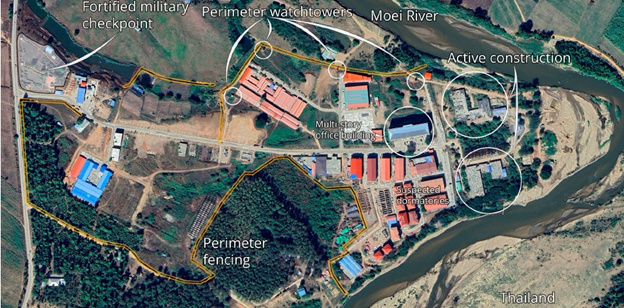
The compound is said to occupy a large mountainous area containing multiple buildings where scam activities are conducted.
Once locked inside Myanmar's compounds, victims undergo intense psychological and physical coercion to perpetuate cybercrimes. Inside the scam centres, victims must run "pig butchering" romance schemes, cryptocurrency fraud, and phantom investment traps.
Working Conditions
Enslaved Workers were allegedly forced to work for as long as 15 to 18 hours a day. According to survivors, detainees are generally allowed to use mobile phones for only 10 to 15 minutes a day.
Physical Abuse
Those who refused to participate in online scams were allegedly subjected to electric shocks or physically assaulted. It also leads to starvation, solitary confinement, tasering, severe beatings, or death.
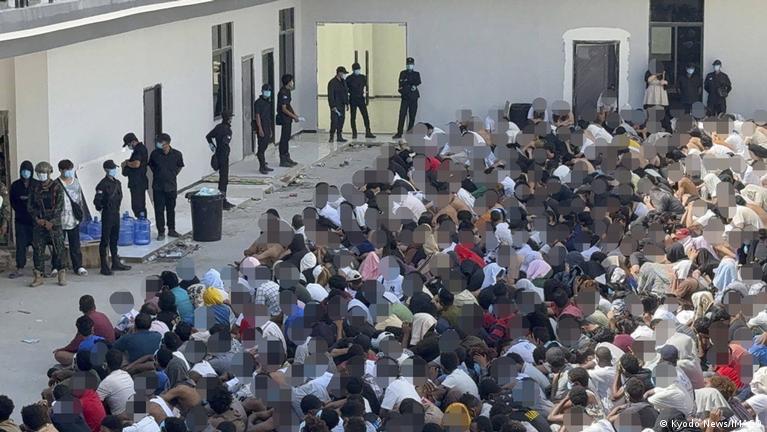
Those familiar with the footage said it also contains scenes showing alleged physical abuse of people held there.
The Ransom Escape
Anyone attempting to leave may reportedly be subjected to demands for large ransom payments. Families must transfer exorbitant crypto ransoms to buy their relative's freedom.
Those who refuse orders or attempt to escape allegedly face beatings, electric shocks, food deprivation and other forms of physical punishment.
The accounts suggest a highly controlled environment in which victims are isolated, monitored and compelled to participate in cyber-enabled fraud.
According to Amzad, the compound was heavily guarded and closely monitored. The people controlling the operation treated the workers as prisoners rather than employees.
Escape Attempt Ends in Near-Death Torture
Unable to endure the conditions, Amzad attempted to escape on July 15 with around 25 to 30 other people. The escape failed. The group was reportedly caught and Amzad was subjected to further brutal torture.
Eventually, he was allegedly dumped in a jungle in a near-dead condition. With assistance from another trafficker, he somehow managed to reach Thailand.
He said, he had gone almost two days without food before receiving assistance from an Australian human-rights activist, who helped him reach safety.
Amzad is now receiving treatment with assistance from migrant workers’ organisations in Thailand.
His body bears numerous marks of physical abuse, while several fingers are broken. He remains physically weak and is still unable to move around normally.
Despite surviving the ordeal, another burden awaits him: nearly Tk 30 million in debt accumulated before his journey abroad.
More Than 200 Bangladeshis Allegedly Trapped
Amzad's case may be only one part of a much larger trafficking operation.
According to accounts from survivors and sources familiar with the situation, more than 200 Bangladeshis are currently believed to be trapped inside a scam compound in Myanmar.
At least six Bangladeshis have reportedly managed to escape from the compound so far. Four of them reached the Thai border town of Mae Sot and surrendered to immigration authorities on the evening of August 5, identifying themselves as victims of human trafficking.
They have since been placed in a shelter under Thailand’s national protection and rehabilitation system. One of the four is reportedly receiving medical treatment at a safe shelter operated by a local non-governmental organisation in Mae Sot because of injuries sustained during alleged abuse.
The other two Bangladeshis who escaped are reportedly still near the Myanmar-Thailand border, waiting to enter Thailand.
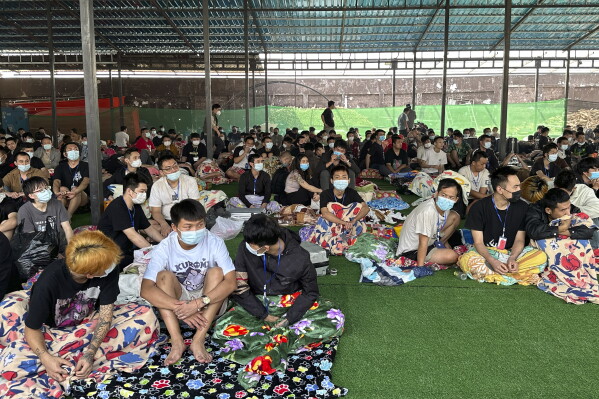
More Than 3,000 People Allegedly Held Captive
The accounts provided by survivors paint an even more disturbing picture. They claim that more than 3,000 trafficking victims from Bangladesh, India, Nepal, the Philippines, Sri Lanka and other countries may be confined within the wider scam-compound area.
Information obtained through local sources during diplomatic outreach by "The Finance Today" indicates that approximately 15 to 16 Chinese-controlled scam operations may be operating inside the compound.
Victims allege that people from different countries are being held against their will and forced to participate in online fraud. These allegations could not be independently verified in full.
Laos to Myanmar: The Hidden Trafficking Route & Scam Industry
Scam compounds of this nature have become a major regional human-trafficking concern. In previous years, similar operations allegedly involving Chinese criminal networks were reported in Cambodia and elsewhere in Southeast Asia (SeA)
As authorities intensified crackdowns on such operations, trafficking networks increasingly shifted activities to areas of Myanmar where armed conflict, weak law enforcement and porous borders have made criminal operations difficult to dismantle.
Myanmar has subsequently emerged as one of the region’s major hubs for industrial-scale online scam operations, with trafficking victims from numerous countries reportedly being forced to work inside compounds.
The alleged exploitation of Bangladeshi nationals is therefore not simply an immigration problem. It potentially involves organised human trafficking, forced labour, cybercrime, financial fraud and cross-border criminal networks.
Geopolitical Responses and Hurdles
A recent study surfaced by The Diplomat reveals that these illicit scam setups pull in tens of billions of dollars annually, eclipsing over 40% of the legitimate combined GDP of Laos, Cambodia, and Myanmar.
While countries like Thailand have retaliated by slashing border electricity, severing telecom signals, and executing large-scale border repatriations, local corruption and ongoing civil unrest in Myanmar allow these criminal syndicates to rapidly pivot, rebuild, and shift deeper into ungoverned territories.
A State Responsibility
The case of Amzad Hossain illustrates how a promise of overseas employment can rapidly turn into a nightmare of trafficking and forced criminality.
He paid Tk 350,000 to secure what he believed was a legitimate job. Instead, he was allegedly sold from one trafficking network to another, forced into online fraud and eventually subjected to torture inside a Myanmar scam compound. He survived—but only barely.
Today, he is undergoing treatment in Thailand with physical scars, broken fingers, recurring health problems and the psychological trauma of captivity. Meanwhile, the debt that drove him to seek employment abroad remains.
And according to survivors, hundreds of Bangladeshi nationals may still be inside the same network.
Are they alive? Where exactly are they being held? How many are being subjected to severe torture? Who recruited and sold them? Who controls the compounds? How are the financial transactions being conducted? And what links exist between the recruiters in Bangladesh and the operators in Myanmar?
These questions demand urgent answers.
Calls for Coordinated Rescue and Investigation
Bangladesh's immediate challenge is to locate and safely rescue nationals who may still be inside the compounds.
Al-Amin Nayan, manager of BRAC's Migration Welfare Centre, said efforts were underway to facilitate the return of escaped Bangladeshis through Thailand and to coordinate with Bangladesh's embassy and consular authorities there.
“The state must play a crucial role in rescuing the Bangladeshis trapped there, ensuring their safety and bringing them back home,” he said.
Tanvir Hasan Joha, a prosecutor at Bangladesh's International Crimes Tribunal and a special investigation officer, said the case should not be treated solely as a repatriation issue.
According to Joha, the six Bangladeshis who escaped and reached Thailand should be protected as victims and their digital, financial and location-related information should be systematically examined.
Such information, he said, could help authorities identify and verify the Bangladeshis still being held inside the Myanmar compound and determine the precise location of the facilities.
He also stressed the need for coordinated action with Thailand to conduct rescue operations.
He called for a Bangladesh-led transnational investigation into human trafficking and cybercrime, including examination of the digital, financial and location data of survivors.
Such an investigation could help authorities identify recruitment networks in Bangladesh, trace financial transactions, establish links between recruiters and operators, and determine the locations of the compounds where victims are allegedly being held.
Authorities Yet to Respond
"The Finance Today" contacted officials associated with the Ministry of Expatriates’ Welfare and Overseas Employment and other relevant authorities several times for comments on the allegations and the government’s efforts to rescue the Bangladeshis reportedly trapped in Myanmar. No response was received before publication.
The allegations highlight the increasingly blurred lines between human trafficking and cybercrime in Southeast Asia, where victims recruited for legitimate employment can end up being forced to commit online fraud.
For the families of those allegedly trapped inside the compounds, however, this is no longer simply an international crime story. It is a race against time to bring their loved ones home alive.
Shamiur Rahman