Women’s Share of Bank Deposits Rises
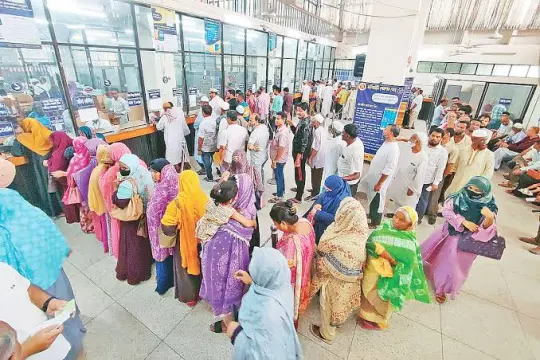
The steady rise in women's deposit accounts reflects their growing economic empowerment and confidence in the formal banking system
More women in Bangladesh are opening bank accounts and increasing their savings, underscoring the country's steady progress in financial inclusion and female economic empowerment, according to the latest data from Bangladesh Bank.
The central bank's data showed that women's share of household deposit accounts rose to 38.6% in March 2026 from 37.8% a year earlier, while their share of total household deposits increased to 33.5% from 32.8%, indicating stronger participation in the formal financial system.
The total number of household deposit accounts climbed from 155,221 in March 2025 to 171,059 in March 2026, after reaching 166,628 in December 2025.
Household deposits also continued to expand, rising from Tk1,062 crore in March 2025 to Tk1,217 crore in March 2026, with women's savings accounting for an increasingly larger proportion of the total.
Bankers said the figures highlight growing financial confidence among women, supported by improved access to banking services, digital finance and targeted financial products.
"The steady rise in women's deposit accounts reflects their growing economic empowerment and confidence in the formal banking system," said Kazi Md Wahidul Islam, Managing Director of Rupali Bank PLC.
"Women are playing an increasingly important role in Bangladesh's banking sector, not only as customers but also as contributors to the country's savings base. The continuous growth in both the number of women depositors and the volume of their deposits indicates greater financial awareness, improved access to banking services and stronger economic participation," he said.
Islam said banks have expanded women-friendly savings schemes, digital banking services and financial literacy programmes, encouraging more women to channel their savings into the formal banking system.
He added that rising female employment, entrepreneurship and remittance earnings are expected to further strengthen women's contribution to the banking sector in the coming years.
Economists said the trend reflects Bangladesh's broader efforts to improve financial inclusion through agent banking, mobile financial services and digital banking, particularly among previously underserved groups.
According to Bangladesh Bank, women now contribute more than one-third of total deposits held with scheduled banks. The central bank said improved access to financial services and greater financial literacy have enabled more women to become economically independent, helping narrow the gender gap while strengthening their role in business and the wider economy.
Despite the gains, analysts said women's participation in the banking system still has room to grow, particularly in rural areas where access to formal financial services remains comparatively limited. They called for continued investment in digital financial infrastructure, financial literacy campaigns and women-focused banking products to sustain the momentum.
Shamiur Rahman