Cancer Care Abroad
SEOK Healthcare builds a new pathway for Bangladeshi patients
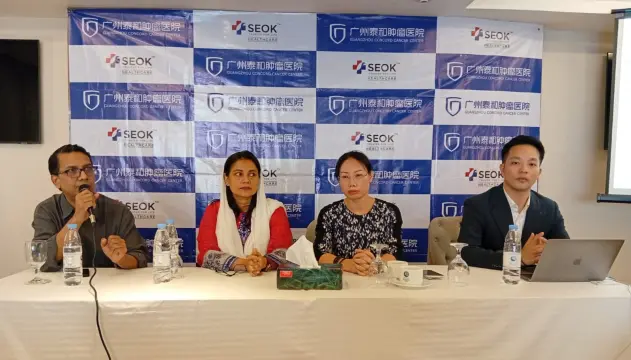
China’s Guangzhou Concord Cancer Center (GCCC) offers specialised oncology services, including proton therapy; experts stress treatment must be based on individual clinical needs
For Bangladeshi families battling cancer, choosing the right treatment can be almost as difficult as confronting the disease itself. From diagnosis and specialist opinions to treatment options, costs and overseas referrals; patients often face a maze of decisions at a time of extreme emotional stress.
Seeking to make that journey more structured, Bangladesh-based SEOK Healthcare has entered into cooperation with Guangzhou Concord Cancer Center (GCCC) in China, creating an additional referral pathway for Bangladeshi patients looking for specialised cancer treatment abroad.
The initiative was highlighted through a press meet and a hospital orientation programme held on Sunday at Hotel Unique Regency in Dhaka.
This event brought together healthcare stakeholders, media representatives and others interested in international cancer treatment, precision oncology and cross-border healthcare cooperation.
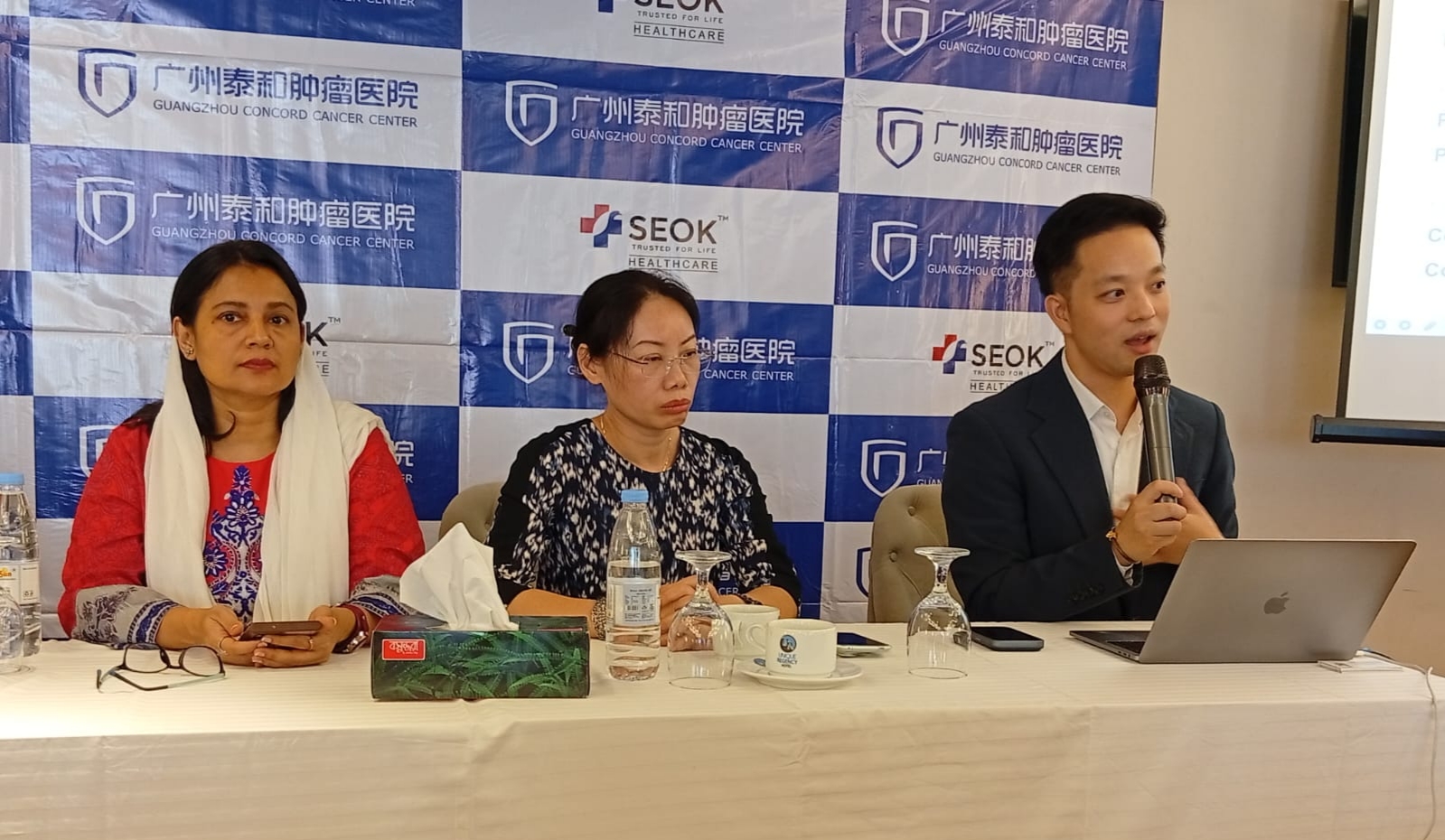
On behalf of SEOK Healthcare, M M Masumuzzaman (Founder & CEO) and Farhana Hasna Tuli (Head of Marketing) were present at the event while Ewan Yu; (Head of International Patient Services) and Stephanie Zhou (Minping Zhou); Deputy Director of Operations, Radiation Oncology from GCCC were also present at the event as a special guest. All of them played a crucial role in negotistion focusing the cross-border cooperation.
From Referral to Treatment Coordination
The initiative goes beyond sending patients to an overseas hospital, according to SEOK Healthcare.
The organisation said that it assists patients with medical information gathering, specialist consultations, second opinions, referral management and other practical aspects of treatment abroad.
A patient's journey may begin with a virtual consultation involving a review of pathology reports, diagnostic images, laboratory results and previous treatment records. Where necessary, patients may obtain a second medical opinion before making major treatment decisions.
This is particularly important for patients considering expensive or highly specialised procedures.
The availability of advanced medical technology does not necessarily mean that the technology is suitable for every patient. Treatment decisions must take into account the patient's cancer type, disease stage, tumour location, previous treatment history and overall health.
Proton Therapy Draws Attention
GCCC offers a range of oncology services, including surgery, chemotherapy, targeted therapy, immunotherapy and advanced radiotherapy.
One of its major areas of focus is proton therapy, an advanced form of radiation treatment capable of delivering radiation with high precision in selected cases.
According to information provided by GCCC, its proton therapy centre began clinical operations in December 2024 and is described by the hospital as the first operational proton therapy centre in South China.
GCCC reported that the centre had treated more than 800 patients by April 2026. However, healthcare professionals caution that proton therapy should not be viewed as a universal solution for cancer patients.
Whether a patient is suitable for proton therapy must be determined by qualified specialists after a comprehensive assessment of the patient's medical condition.
BD-China Healthcare Cooperation
The relationship between SEOK Healthcare and GCCC has developed over the past several months.
In March 2026, a Bangladeshi delegation involving SEOK Healthcare representatives and others visited the Guangzhou centre. Discussions included precision oncology, international patient management, referral systems, insurance-related support and potential long-term cooperation.
GCCC later participated in the 17th Dhaka International Medical Equipment Exhibition in May, where it showcased its proton therapy and precision-oncology capabilities.
SEOK Healthcare professionals served more than 4,000 patients during the past three years and is affiliated with more than 75 hospitals and healthcare institutions worldwide, with a network involving more than 1,000 physicians associated with internationally recognised institutions.
The Challenges Beyond Treatment
For a patient travelling abroad, securing a hospital referral is only the first step.
Medical records, visas, travel arrangements, accommodation, interpretation, treatment scheduling and post-treatment follow-up can create additional challenges for patients and their families.
SEOK Healthcare says it assists patients throughout these stages, while GCCC says its international patient services include medical-record assessment, referral coordination, visa assistance, interpretation, treatment support and post-treatment follow-up.
For families unfamiliar with the healthcare system of another country, such coordination can reduce the administrative burden associated with overseas treatment.
Transparency Remains Critical
Despite the potential benefits of international treatment, patients should carefully evaluate their options before travelling abroad.
Doctors and healthcare professionals recommend that patients obtain clear information about the proposed treatment, expected benefits, potential risks, treatment duration, total costs and arrangements for follow-up care after returning home.
The SEOK Healthcare-GCCC cooperation represents another emerging channel of healthcare collaboration between Bangladesh and China and could give Bangladeshi cancer patients access to additional specialist opinions and advanced oncology services.
But the ultimate measure of such cooperation should not be the sophistication of medical equipment or the number of institutional affiliations.
For patients and their families, the most important considerations remain appropriate medical advice, transparent treatment options, realistic cost information and continuity of care.
For someone facing cancer, a well-managed international referral can therefore mean much more than an overseas hospital appointment. It can provide a coordinated pathway—from medical records and specialist opinions to treatment and follow-up—allowing patients to make some of the most difficult decisions of their lives with better information and professional guidance.
Shamiur Rahman