Reforming Bangladesh’s credit system amid loan syndicates, weak governance and borrower vulnerabilit
Loans Should Empower People, Not Trap Them in Poverty
The goal of lending should always be empowerment
“Bangladesh’s biggest challenge today is not the shortage of credit, but the failure to manage credit responsibly.”
Few financial innovations have transformed rural Bangladesh as significantly as microcredit. For millions of people who remained outside the formal banking system due to lack of collateral, limited income, or geographical barriers, microfinance created access to much-needed capital.
It helped women start small businesses, enabled farmers and fishers to invest in livelihoods, supported rural entrepreneurship, and contributed to financial inclusion. Bangladesh’s experience with microfinance has often been presented globally as a model of how access to finance can support poverty reduction and social development.
However, after decades of expansion, the sector now faces a critical question: Is credit continuing to serve as a pathway to economic empowerment, or is it becoming a source of financial vulnerability for some borrowers?
The answer depends not only on how much money is distributed but also on how effectively loans are managed, monitored, and protected from misuse.
Because the real challenge is not simply access to money. The real challenge is ensuring that credit creates opportunity rather than deeper financial insecurity.
When loans become a cycle of debt
The fundamental purpose of microcredit was to help people become economically self-reliant. A loan can transform lives when it helps a farmer increase production, a woman entrepreneur expand her business, or a small trader create employment.
But problems emerge when loans are used not for income generation but for repaying previous debts.
Across many vulnerable communities, a worrying pattern has emerged: borrowers often take new loans to repay existing ones. Some borrow from one organisation to meet instalments of another. Over time, families become trapped in a cycle of debt without achieving meaningful economic improvement.
This situation requires a shift in focus. Loan providers must not only measure repayment rates but also assess whether borrowers are genuinely benefiting from credit.
Responsible lending requires understanding a borrower’s repayment capacity, economic condition, and the purpose for which the loan is taken.
A successful credit system is not one where people continue borrowing; it is one where people gradually become financially independent.
The unequal reality of loan defaults
Bangladesh’s banking sector has been struggling with a serious non-performing loan problem for years. Large-scale loan irregularities involving influential borrowers have raised concerns about governance, accountability, and institutional weaknesses.
At the same time, small borrowers often face immediate consequences when they fail to repay relatively small amounts.
A marginal entrepreneur who suffers losses due to illness, natural disasters, market instability, or economic shocks may quickly face social pressure and financial distress.
This raises an important issue: Are all defaults being evaluated fairly?
A large borrower who misuses billions of taka due to systemic weaknesses cannot be viewed in the same way as a small entrepreneur who temporarily struggles because of circumstances beyond their control.
A modern credit system must distinguish between intentional default and genuine hardship.
Loan syndicates: A threat to financial trust
One of the emerging concerns in the microfinance sector is the misuse of borrowers’ identities through loan syndicates.
In such cases, a loan may be taken under the name of a poor individual, while the actual beneficiary is someone else. The borrower may have little or no control over the loan money, yet remains responsible for repayment.
For vulnerable communities, this can be devastating.
A person who never received the benefit of a loan should not be forced to carry its financial burden. Such practices damage not only individuals but also the credibility of the entire financial inclusion system.
Preventing loan syndicates requires stronger verification systems, effective monitoring, and accountability at every level.
Information is the foundation of responsible lending
Modern financial systems depend on accurate information. Banks use credit information mechanisms to assess borrower risks, but the microfinance sector requires a more comprehensive approach.
A major challenge is that borrowers may obtain loans from multiple institutions simultaneously. Without a coordinated information-sharing system, lenders may unknowingly push vulnerable people into excessive debt.
Bangladesh needs an integrated credit information platform for microfinance borrowers that can help institutions identify:
A borrower’s total outstanding loans;
Multiple borrowing from different organisations;
The borrower’s actual repayment capacity.
Such a system should not be viewed as a restriction on access to credit. Rather, it should be seen as a protection mechanism for borrowers.
Strengthening borrower rights and accountability
The success of microfinance depends heavily on the relationship between field officers and borrowers.
When officials misuse borrower information, create fraudulent loans, or engage in financial misconduct, the damage extends beyond individual victims. It weakens public confidence in the entire sector.
Therefore, institutions must establish stronger borrower protection measures, including:
Transparent grievance mechanisms;
Independent investigations of complaints;
Digital records to prevent manipulation;
Strict accountability for misconduct.
A borrower’s simple question deserves a clear answer:
“Why should I repay a loan that I never received?”
No responsible financial system can ignore this question.
A new direction for Bangladesh’s credit sector
The future of Bangladesh’s microfinance sector should focus not only on expanding loan distribution but also on improving the quality and impact of lending.
Regulatory institutions such as the Microcredit Regulatory Authority (MRA) must strengthen supervision through:
Digital monitoring systems;
Risk-based inspections;
Faster complaint resolution;
Early identification of irregularities.
Development organisations should also invest more in financial literacy, entrepreneurship support, and livelihood development.
Credit alone cannot eliminate poverty. Credit combined with skills, market access, and responsible financial management can create sustainable economic progress.
Ten priorities for reform
Bangladesh’s credit system needs a comprehensive reform agenda:
Establish an integrated credit information system for microfinance borrowers.
Introduce NID-based borrower verification mechanisms.
Develop strong measures against loan syndicates.
Protect borrowers through effective consumer protection policies.
Expand digital loan management systems.
Strengthen regulatory oversight.
Ensure accountability of loan officers and institutions.
Separate genuine hardship cases from deliberate defaults.
Promote alternative dispute resolution mechanisms.
Improve financial literacy among borrowers.
Conclusion: Building a humane credit system
Bangladesh’s microfinance sector has achieved remarkable success, but its future depends on reform and responsibility.
A borrower is not merely a source of repayment. A borrower is a citizen, a family provider, an entrepreneur, and a contributor to the economy.
People need access to credit, but they do not need debt traps. They need opportunity, not exploitation. They need financial security, not uncertainty.
The goal of lending should always be empowerment.
Bangladesh must build a credit system where: loans become a bridge to people’s dreams—not a prison of poverty.
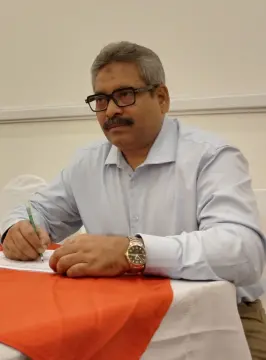
Mustafa Kamal Akand; Policy Analyst and Development Professional
Shamiur Rahman