Media professional's day-long tour to Padma Valley Resort
A day away from the newsroom
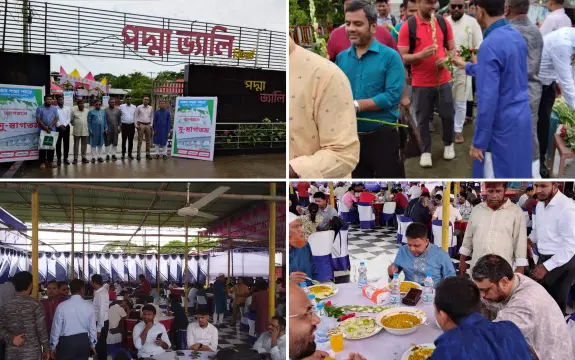
The event brought together senior journalists, columnists and representatives of different media organisations in a relaxed setting beside the Padma River
Away from the newsroom and the pressures of daily reporting, a group of prominent journalists, editors and media professionals gathered on Friday for a day-long fellowship aimed at strengthening professional camaraderie and exchanging views on journalism and the challenges facing the media.
The event was held at Padma Valley Resort in Jazira, Shariatpur, where media professionals from national and local outlets joined a breakfast and lunch hosted in their honour.
Among those attending were Bangladesh Federal Union of Journalists (BFUJ) President Obaidur Rahman Shaheen, Dhaka Union of Journalists (DUJ) President Md Shahidul Islam, former DUJ leader Kamal Uddin, Old Dhaka Journalists Forum President Salahuddin Mithu, Deshkal Editor Zakir H Talukder, and Shibchar Press Club Secretary and Dainik Pranto Editor Abul Khair Khan.
After their arrival, guests were welcomed with traditional drinks and breakfast, followed by an informal exchange of views on journalism and the state of press freedom.
The gathering offered the participants a chance to step away from their demanding professional routines and reconnect with colleagues in a relaxed setting overlooking the river.
Speaking as the chief guest, BFUJ President Obaidur Rahman Shaheen said artificial intelligence (AI) was bringing greater speed and new dimensions to news production, but its uncontrolled use could pose serious risks to the fundamental principles of journalism—reliability, objectivity and public trust.
“No information obtained from AI should be used directly in a news report without proper verification. Audio-visual content should be cross-checked with at least two reliable sources before being used in news reports," he added.
“AI should be considered an assisting tool, not a replacement for journalists,” Shaheen said, stressing that every final report should be reviewed and refined by a professional human journalist or editor.
DUJ President Md Shahidul Islam stressed the importance of professional unity, responsibility and independent and objective journalism.
He said there could be no alternative to truthful and objective reporting if the media were to maintain and strengthen public trust.
According to Islam, journalists are often required to work amid physical and security risks while carrying out their professional duties, while a lack of cooperation from the administration can create additional obstacles.
He said local journalism was facing a wide range of challenges and that press freedom at the local level needed to be understood in the context of those realities.
“It is important to examine how much local journalists are writing and, more importantly, how freely they are able to write,” he said, adding that the underlying reasons for any constraints needed to be identified.
Islam pointed to several longstanding problems, including the difficulty of treating journalism as a full-time profession, pressure from influential local groups, attacks and lawsuits, as well as internal divisions and factionalism within the profession.
‘Journalists’ job is to bring the truth to light’
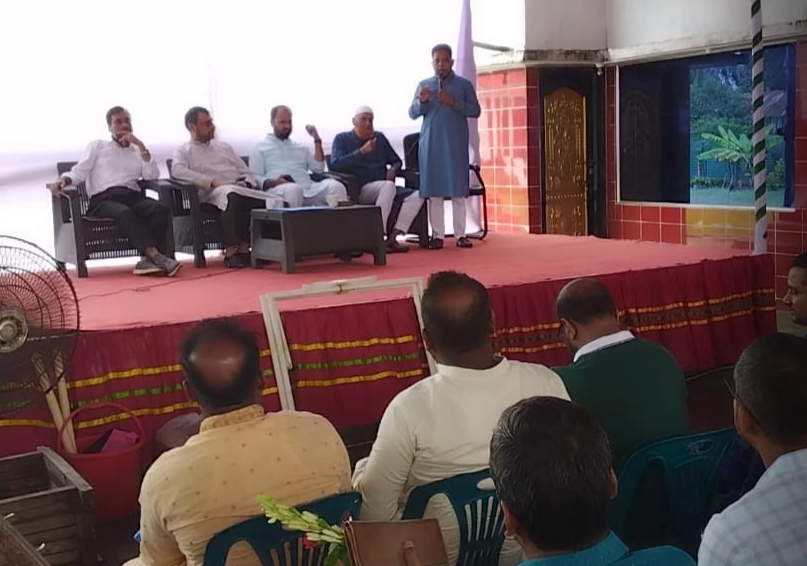
Md Matiur Rahman said the contribution of journalists and media professionals to the country’s development, economy and public discourse remains significant.
He said the gathering was organised to provide journalists with an opportunity to strengthen professional relationships beyond their day-to-day responsibilities.
“We came here to enjoy ourselves. We will spend the day together, travel on the Padma and get to know one another better,” he said.
Rahman also raised concerns about difficulties faced by journalists while collecting information, particularly when reporting on alleged irregularities and corruption involving government officials and public institutions.
“Journalists are not the exclusive friends of any political party or group. Their responsibility is to bring the truth to light,” he said.
He alleged that access to information had become increasingly difficult for journalists, even as contractors continued to have easy access to project officials.
“While contractors can move freely into project directors’ rooms, access for media professionals is increasingly being restricted,” he said.
Journalists working in the field are facing obstacles at various stages of their professional duties, Rahman added.
He also expressed concern over what he described as a decline in the respect traditionally accorded to journalists and restrictions on freedom of expression. Calling for steps to protect journalists’ professional interests and welfare, he urged the government to take necessary measures to address their concerns.
The event was not limited to professional discussions. After breakfast, the guests took a boat trip on the Padma, enjoying the river and the surrounding landscape. Lunch featured traditional Bengali dishes, including hilsa, ayre and shrimp, along with other local delicacies.
Senior journalists and media leaders praised the initiative and thanked the organisers, saying such gatherings provide an opportunity for professional exchange while strengthening relationships within the media community.
The gathering ended in a convivial atmosphere, with journalists and media professionals spending the day exchanging views, strengthening professional ties and taking a break from the pressures of newsroom life.
Shamiur Rahman