New Tax Chief Sparks Debate Over Reform, Seniority and Institutional Independence
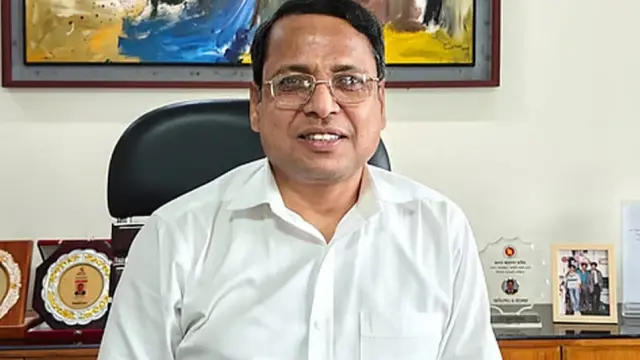
While supporters have welcomed the decision as a long-overdue recognition of professional expertise within the tax administration, critics argue that the appointment departs from long-established bureaucratic norms and raises questions about seniority, institutional governance, and the government's reform agenda
Bangladesh's appointment of a career tax officer to lead the National Board of Revenue (NBR) for the first time has triggered a nationwide debate over administrative convention, institutional reform, and the future of the country's tax administration.
On 29 June, the Ministry of Public Administration appointed Ahsan Habib, a senior officer from the 15th Bangladesh Civil Service (Taxation) cadre, as Acting Secretary of the Internal Resources Division (IRD) and Acting Chairman of the National Board of Revenue (NBR), replacing the outgoing chairman, Md. Abdur Rahman Khan.
While supporters have welcomed the decision as a long-overdue recognition of professional expertise within the tax administration, critics argue that the appointment departs from long-established bureaucratic norms and raises questions about seniority, institutional governance, and the government's reform agenda.
The appointment is historically significant. Since the establishment of the NBR, the institution has traditionally been led by senior officials from the administrative cadre serving as Secretary of the Internal Resources Division. Ahsan Habib is the first career taxation officer to assume the organization's highest office, marking a notable shift in Bangladesh's revenue administration.
A Break from Administrative Convention
Under Bangladesh's existing administrative structure, the Secretary of the Internal Resources Division automatically serves as Chairman of the National Board of Revenue by virtue of the office.
Although no law explicitly prohibits a taxation cadre officer from becoming Secretary, such appointments have historically followed established civil service procedures, including promotion to secretary rank or prior inclusion in the Deputy Secretary (DS) Pool.
Several retired civil servants argue that the current appointment departs from those long-standing administrative practices.
"This is less a question of legality than of administrative convention," said one senior official of the Ministry of Public Administration, speaking on condition of anonymity because he was not authorized to comment publicly.
According to the official, the government possesses the constitutional authority to make exceptional appointments. Nevertheless, appointments that bypass established promotion structures often attract heightened scrutiny because of their potential implications for institutional hierarchy and morale.
Some former bureaucrats contend that much of the controversy could have been avoided had Ahsan Habib first been elevated to Secretary rank—or granted equivalent status under the President's constitutional authority—before assuming leadership of the NBR.
Government's Position
The government has defended the appointment, arguing that the National Board of Revenue is a highly specialized institution that requires leadership with extensive professional experience in taxation rather than general administrative expertise.
State Minister for Public Administration M.A. Bari described Ahsan Habib as an honest, capable, and academically accomplished officer. According to the minister, Habib had long been deprived of deserved career advancement despite being one of the top-performing officers of his batch.
The minister also said that Habib had previously sought inclusion in the Deputy Secretary Pool during the previous administration but was allegedly overlooked for political reasons.
Government officials argue that appointing an experienced tax professional reflects a broader commitment to strengthening institutional capacity and improving revenue administration through technical expertise rather than adherence to traditional bureaucratic conventions alone.
Why the Appointment Has Become Controversial
The controversy surrounding Ahsan Habib's appointment extends beyond questions of administrative procedure. It has also become intertwined with Bangladesh's evolving political landscape and the interim government's broader reform agenda.
Critics argue that the appointment appears inconsistent with the government's stated commitment to strengthening transparency, accountability, and institutional neutrality. Some have questioned Habib's service under the previous Awami League administration, noting that he held several influential positions during that period and reportedly participated in a number of government-funded overseas visits.
These allegations have circulated widely in political and social media discussions. However, neither the government nor the National Board of Revenue has issued a detailed public response addressing the specific claims.
Administrative analysts caution against drawing conclusions solely on the basis of public criticism. They note that appointments to senior government positions are typically based on a combination of professional competence, administrative requirements, integrity assessments, and the government's confidence in an individual's ability to lead.
"Public debate is natural in appointments of this significance," said a retired senior civil servant. "However, criticism alone should not be treated as evidence of misconduct. Any allegations should ultimately be examined through appropriate institutional processes."
The Seniority Debate
Among career officials within the NBR, concerns over seniority have emerged as one of the most contentious aspects of the appointment.
Ahsan Habib belongs to the 15th BCS (Taxation) batch. Several officers senior to him in terms of service length and administrative experience remain in the organization. Some officials privately fear that bypassing senior officers could weaken the established chain of command and affect morale within the institution.
Supporters, however, argue that leadership appointments should not be determined solely by seniority. They contend that professional competence, integrity, reform-minded leadership, and proven operational experience are equally important considerations for heading a technically specialized institution such as the NBR.
The debate reflects a broader and longstanding question within Bangladesh's civil service: whether promotions to key leadership positions should continue to prioritize administrative hierarchy or place greater emphasis on specialized expertise and performance.
A Divided Public Response
Public reaction has been similarly divided.
Many commentators have argued that, in the aftermath of Bangladesh's recent political transition, appointments to strategic state institutions should be beyond reproach and capable of commanding broad public confidence.
Some political observers believe that any perception of association with the previous administration inevitably attracts heightened scrutiny, regardless of an individual's professional record.
Others counter that judging public officials primarily through political associations risks discouraging merit-based appointments and undermining the professionalism of the civil service.
On social media, supporters have described Habib's promotion as a landmark recognition of technical expertise within the taxation cadre. Critics, meanwhile, have called on the government to provide greater transparency regarding the rationale behind the appointment.
For many observers, the issue extends beyond a single individual. It has become a test of how Bangladesh balances administrative convention, political transition, and institutional reform while preserving public confidence in state institutions.
Professional Credentials Behind the Appointment
Despite the controversy, many within Bangladesh's revenue administration view Ahsan Habib's appointment as a recognition of professional competence rather than political preference.
A graduate of the Department of Geology at the University of Dhaka, Habib earned both his Bachelor's and Master's degrees with distinction, securing First Class First in his postgraduate examination. He later joined the Bangladesh Civil Service after ranking second in the national merit list of the 15th BCS (Taxation) cadre.
Throughout his career, he has maintained a strong academic and professional record. He topped departmental training at the BCS Tax Academy, received an A+ in computer training conducted by the Bangladesh University of Engineering and Technology (BUET), and earned another A+ in the Foundation Training Course at the Bangladesh Public Administration Training Centre (BPATC).
Colleagues familiar with his career describe him as a technically skilled officer with extensive experience in tax policy, compliance, investigations, and institutional modernization.
A Career Focused on Tax Administration
Over the past three decades, Habib has served in a wide range of positions across Bangladesh's tax administration.
His experience spans tax assessment, audit, transfer pricing, intelligence operations, enforcement, taxpayer services, and the digital transformation of revenue administration. He has also participated in professional training programmes in India, Malaysia, the Philippines, several European countries, and other international jurisdictions.
His overseas engagements have included official visits and professional exchanges in the United States, China, Singapore, Thailand, Vietnam, Hong Kong, the United Arab Emirates, and the United Kingdom.
In addition to his administrative responsibilities, Habib has served as a resource person for several professional institutions, including the Anti-Corruption Commission (ACC), the BCS Tax Academy, the Institute of Cost and Management Accountants of Bangladesh (ICMAB), and the Bangladesh Computer Society.
Supporters argue that this combination of academic achievement, technical expertise, and field experience distinguishes him from many of his contemporaries.
Leadership During the NBR Reform Process
One of the strongest arguments advanced by Habib's supporters relates to his role during the interim government's efforts to restructure Bangladesh's revenue administration.
In 2025, the government initiated a major reform programme aimed at separating revenue policy from revenue administration. The initiative proposed establishing dedicated institutions responsible for policy formulation and operational management, a move intended to modernize the country's tax system.
The reform process, however, generated resistance from sections of the bureaucracy, leading to protests and uncertainty within the National Board of Revenue.
Officials familiar with the events said, Habib played an important role in maintaining administrative stability during this period. Supporters credit him with helping the institution navigate a politically sensitive transition while ensuring that core revenue operations continued without significant disruption.
Critics acknowledge that the reform process was contentious but differ over the extent of Habib's role and the broader implications of the government's restructuring efforts.
Record at the Central Intelligence Cell
Habib's tenure as Director General of the Central Intelligence Cell (CIC) is frequently cited by supporters as evidence of his operational leadership.
During his time at the CIC, the agency pursued investigations into alleged tax evasion, illicit financial flows, and offshore asset transfers involving several influential individuals and major corporate groups.
Officials involved in those investigations say the CIC uncovered significant tax irregularities amounting to hundreds of crores of taka and intensified efforts to identify assets allegedly transferred abroad.
Habib also played a leading role in tax enforcement actions involving the online gaming platform UlkaGames, which resulted in the recovery of substantial unpaid taxes, according to officials familiar with the matter.
Supporters argue that these initiatives demonstrated his willingness to pursue complex financial investigations irrespective of the profile of those involved.
Whether those achievements alone justify his elevation to the country's highest revenue post remains a matter of debate. Nevertheless, they have become a central pillar of the government's defence of the appointment and a key reason many career tax officers view his promotion as a milestone for Bangladesh's revenue administration.
Support Within the NBR
For many officers within the National Board of Revenue, Ahsan Habib's appointment represents more than an individual promotion—it is seen as institutional recognition of the professional tax cadre.
Since the NBR's establishment, its top leadership has traditionally been drawn from the general administration cadre. Career tax and customs officers have long argued that professionals with firsthand experience in tax administration are better equipped to lead one of the country's most technically demanding institutions.
Habib's appointment is therefore viewed by many officials as a milestone in the evolution of Bangladesh's revenue administration. Supporters believe it reflects a shift toward merit-based leadership, where technical expertise and operational experience are given greater weight in senior appointments.
Several current and former NBR officials also point to recommendations made by the Interim Government's Advisory Committee on Revenue Reform. The committee proposed separating tax policy formulation from tax administration, establishing an independent Revenue Commission, and allowing experienced officers from the tax and customs cadres to lead the country's revenue institutions.
To many within the organization, Habib's appointment is consistent with that broader vision of institutional reform.
The Economic Stakes
The debate surrounding the appointment comes at a particularly critical time for Bangladesh's economy.
The government has set an ambitious revenue collection target of approximately Tk 6.04 trillion for the 2026–27 fiscal year—the highest in the country's history. Achieving that target will be essential to financing public expenditure, infrastructure projects, debt obligations, and social protection programmes amid mounting fiscal pressures.
Revenue economists warn that prolonged uncertainty or internal divisions within the NBR could affect administrative efficiency and tax collection.
"The institution cannot afford prolonged internal discord at a time when revenue mobilisation has become one of the government's highest economic priorities," said one former senior tax official.
Others argue that effective leadership, institutional stability, and the confidence of field-level tax officers will ultimately determine whether the ambitious revenue target can be achieved.
The Challenges Ahead
Regardless of the debate surrounding his appointment, Ahsan Habib now faces an exceptionally demanding assignment.
Beyond meeting record-high revenue targets, he must strengthen taxpayer confidence, accelerate digital transformation, improve compliance, combat tax evasion, and maintain the confidence of officers across different cadres within the NBR.
Equally important will be his ability to bridge internal divisions created by the appointment itself. Restoring institutional cohesion while maintaining operational effectiveness may prove just as significant as increasing tax revenues.
Observers say his success will ultimately be judged not by the controversy surrounding his appointment but by measurable improvements in governance, revenue performance, and institutional credibility.
Conclusion
Ahsan Habib's appointment marks a turning point in the history of Bangladesh's revenue administration.
To supporters, it represents long-overdue recognition of technical expertise and professional merit within the taxation cadre. To critics, it raises legitimate questions about administrative convention, seniority, and the transparency of senior public appointments.
Both perspectives reflect broader debates over how Bangladesh should reform its public institutions during a period of political transition and economic pressure.
At present, many of the allegations and concerns circulating in public discourse remain matters of debate rather than officially established fact. Neither the government nor the National Board of Revenue has issued a comprehensive public response addressing every criticism raised since the appointment.
Ultimately, the long-term significance of Ahsan Habib's appointment will depend less on the controversy that accompanied it than on the performance that follows. If his leadership delivers stronger revenue collection, institutional stability, greater transparency, and meaningful administrative reform, the appointment may come to be regarded as a landmark decision in Bangladesh's public administration. If not, it is likely to remain a case study in the complexities of balancing reform, merit, and bureaucratic convention.
Shamiur Rahman