Bangladesh’s growth may fall below 3pc: IMF
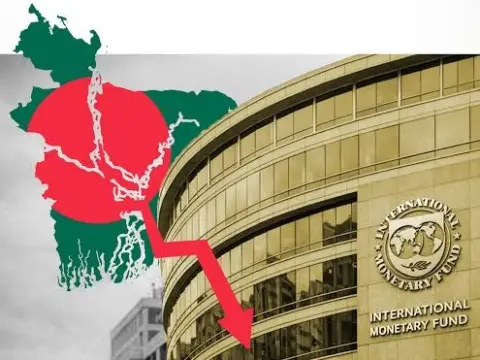
The assessment came after a five-day IMF staff mission led by Mission Chief Ivo Krznar, which visited Dhaka from 12 to 16 July following the government’s request for a new IMF-supported economic reform programme
The International Monetary Fund (IMF) has projected Bangladesh’s economic growth to slow to 3.5% in the fiscal 2026-27, warning that it could fall below 3% over the medium term unless the country undertakes decisive fiscal and banking-sector reforms.
The assessment came after a five-day IMF staff mission led by Mission Chief Ivo Krznar, which visited Dhaka from 12 to 16 July following the government’s request for a new IMF-supported economic reform programme.
In an end-of-mission statement issued on Thursday, the IMF said Bangladesh continues to face significant fiscal, financial sector and inflationary challenges, exacerbated by the ongoing conflict in the Middle East.
According to the Fund, higher global commodity prices and supply disruptions have renewed inflationary pressures, increased subsidy costs and further squeezed the government’s already limited fiscal space.
Rising import costs have also put pressure on the country’s external accounts despite continued strong growth in remittance inflows, while stress in the banking sector remains elevated.
The mission said discussions with the authorities focused on recent economic developments, reform priorities and the possible framework for a new IMF-supported programme.
Talks on the size of the programme and its reform commitments will continue in the coming months, it added.
The IMF reiterated that stronger domestic revenue mobilisation and subsidy rationalisation are essential to create fiscal space for higher social and development spending.
It also stressed the need for targeted social protection measures to cushion vulnerable households from the impact of revenue reforms.
The Fund recommended maintaining tight monetary policy and prudent fiscal management to reduce inflation and rebuild foreign exchange reserves.
It also urged Bangladesh to consistently implement the crawling peg exchange rate regime introduced in 2025 to enhance exchange-rate flexibility and preserve external stability.
On the financial sector, the IMF said banking-sector restructuring should be based on a credible and comprehensive strategy, including an orderly resolution of weak banks to safeguard macro-financial stability and support private investment.
While describing the discussions with the Bangladeshi authorities as constructive, the IMF cautioned that risks to the economic outlook remain tilted to the downside because of persistent banking-sector weaknesses, fiscal pressures and external shocks.
The IMF team thanked the government and other stakeholders for their cooperation during the visit and said it looked forward to continued engagement as discussions on a new Fund-supported programme progress.
Shamiur Rahman