
- International /
- US strike ends Chavismo's Rule

Int'l Correspondent
Published:2026-01-03 22:10:49 BdST
Who is Nicholas Maduro?US strike ends Chavismo's Rule
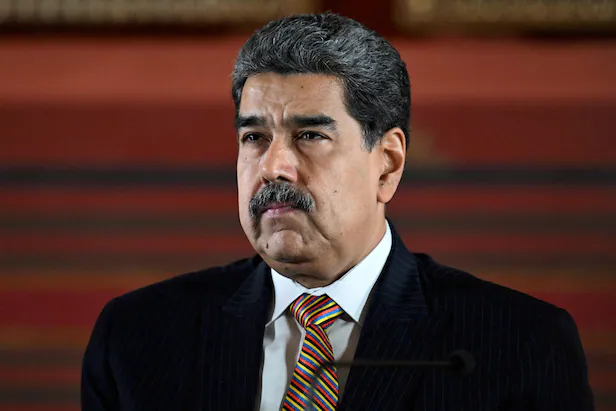
Amid reports that U.S. military operations have captured Venezuelan President Nicholas Maduro, 64 years old, and transferred him abroad, the nearly 30-year rule of "Chavismo" (Chávezism) is assessed to have reached a historic turning point.
It is expected to have significant repercussions not only on Venezuela’s political situation but also on the landscape of left-wing regimes in Latin America.
U.S. President Donald Trump stated on his Truth Social on the 3rd, "We successfully carried out a large-scale operation against Venezuela and its leader Maduro," and "Maduro was arrested along with his wife and transferred outside Venezuela."
Trump explained that this operation was conducted in cooperation with U.S. law enforcement agencies and announced that a related press conference will be held at 11 a.m., local time (1 a.m. on the 4th, Korean time).
Who is Nicholas Maduro
Maduro is an exceptional figure in Venezuela’s modern political history. Born in the capital, Caracas, he moved to Cuba in his 20s, joined the "Communist Youth Union," and received education there.
After returning home, he transformed into a labor activist with a background as a bus driver. In the 1990s, while engaging in transportation union activities, he formed a connection with former President Hugo Chávez.
Maduro led the movement to release Chávez, who was imprisoned due to a failed coup, thereby establishing his political presence. During this process, he met Cilia Flores, Chávez’s lawyer at the time, and they became a couple.
Entering politics around the time of Chávez’s rise to power in 1999, Maduro advanced through positions such as congressman, speaker of the congress, and foreign minister, eventually becoming vice president in 2012.
He was able to remain in office for a long time by faithfully supporting Chávez’s hardline anti-Americanism and populist policies.
Chávez publicly designated Maduro as his "successor" at the end of 2012 while battling cancer. Chávez’s statement, "If you look down on Maduro for being a former bus driver, then he is the bourgeoisie," was essentially a declaration to pass on his political legacy to Maduro.
In the 2013 presidential election held after Chávez’s death the following year, Maduro was elected president and ascended to power.
Maduro’s rule was a continuation of Chávez’s hardline anti-American policies and experimental populist measures.
Venezuela, which holds the world’s largest oil reserves, once implemented large-scale welfare policies such as free education and healthcare, and low-cost housing supply based on "oil money."
However, as the oil industry, which accounted for 95% of exports, collapsed due to falling international oil prices and structural inefficiencies, the economy plummeted rapidly. The collapse of currency value, hyperinflation, and chronic shortages of food and medicine became the norm.
The Maduro regime persisted with "rationing" and price controls instead of market reforms even during the crisis. The long lines stretching several kilometers to obtain daily necessities became a symbol of Venezuela’s economic collapse.
Politically, the regime forced constitutional amendments to extend its rule, and protests by the opposition and citizens opposing this escalated into bloody clashes. By controlling the legislative, executive, and judicial branches, it hollowed out the separation of powers and faced criticism from the international community.
In particular, the July 2024 presidential election, where the opposition was expected to prevail, was announced as a victory for Maduro amid controversies over "secret vote counting" and "proxy voting."
Maduro claimed he had successfully been re-elected for the third time and instead strengthened his iron-fisted rule, continuing to suppress opposition forces.
At the time, the United States, the European Union (EU), and most Latin American countries, including Brazil, Mexico, and Argentina, did not recognize Maduro’s election victory and demanded the transparent release of election results.
However, the Supreme Court, controlled by the Maduro regime, played the role of a "lackey" by approving the extension of the regime, stating "there were no issues with the election."
As a result, Venezuela has become synonymous with a "failed state." Millions of citizens risked their lives crossing borders to neighboring countries like Chile and Colombia, the economy of what was once South America’s largest oil-producing nation collapsed miserably, and the country devolved into a place where drug and criminal organizations run rampant.
The nearly 30-year Chavismo rule, from Chávez’s rise to power in 1999 to Maduro, has been cited as a representative failure of socialist experiments.
In this way, Venezuela has long maintained a left-wing regime, serving as the frontline of anti-American forces in Latin America, while also establishing strategic close ties with China and Russia. Due to this structure, the U.S. has viewed the Venezuela issue as a key link in curbing Chinese influence.
Maduro’s arrest suggests the possibility of closing a chapter in Venezuela’s modern politics, marked by Chavismo rule, beyond the downfall of an individual. However, whether political stability and regime transition after the power vacuum will proceed smoothly remains uncertain.
The movements of the military and pro-regime forces, the reorganization of the opposition led by María Corina Machado, the 2025 Nobel Peace Prize laureate who claims to represent democratic forces, 59 years old and the extent of international intervention are emerging as key variables that will determine Venezuela’s future.
Unauthorized use or reproduction of The Finance Today content for commercial purposes is strictly prohibited.