
- Opinion /
- New PM has a lot to do to prevent corruption

N. N. Tarun
Published:2026-02-25 19:09:33 BdST
New PM has a lot to do to prevent corruption
Economics sees corruption as a bureaucratic, institutional and political problem. Although psychology and sociology have seen it as a moral decline and social disease. No matter how you look at it, corruption can be prevented. Even if there is corruption in a new state at the beginning of development, the problem of lack of good governance gradually disappears with economic development.
The history of development says so. Moreover, as the Dutch-born British philosopher Bernard Mandeville said, ‘When the responsibility of the state falls in the hands of a skilled and honest politician, he can sometimes turn the dishonesty of the individual into something beneficial for the collective.’
The article written by Soumit Joydeep ‘Tarek Rahman has an opportunity to become a “statesman”’ echoes this theory.
Italian economist Mauro Paolo cited the example of Bangladesh in his famous article (Corruption and Growth) published in 1995. There he mentioned that Bangladesh is losing its investment and growth to a large extent due to corruption.
The World Bank has commented that if there was no corruption in Bangladesh, growth could have doubled. Therefore, it is understood that Bangladesh is being deprived of the desired growth due to corruption.
Therefore, the head of government needs to understand the causes of corruption. If the causes of corruption are known, it is possible to find a remedy.
Excessive regulations or laws are a major cause of corruption. The more regulations, the more opportunities there are for bureaucrats to take bribes. The World Bank publishes an index that reflects the level of corruption, ‘How easy is it to set up a business’.
Malaysia has made unprecedented progress in business and commerce in the last four decades. Malaysia is ranked 12th out of 190 countries in terms of ease of doing business, while Bangladesh is ranked 168th. Therefore, the government needs to reduce regulations to create a business-friendly environment.
Research has shown that giving discretionary power to bureaucrats or politicians means giving them the opportunity to commit corruption. This power should be in the hands of the legislators, after extensive discussion in parliament and before this discussion, the parliamentary committee should listen to all the parties concerned.
For example, if the law is related to garments, then the opinions of the garment workers should be taken. Gunnar Myrdal also mentioned in his famous book Asian Drama that giving discretionary power to bureaucrats is a cause of corruption.
The smaller the size of the government and the more decentralized the power, the less the scope for corruption will be. Especially if government expenditure is divided into different levels, corruption should be reduced to a great extent.
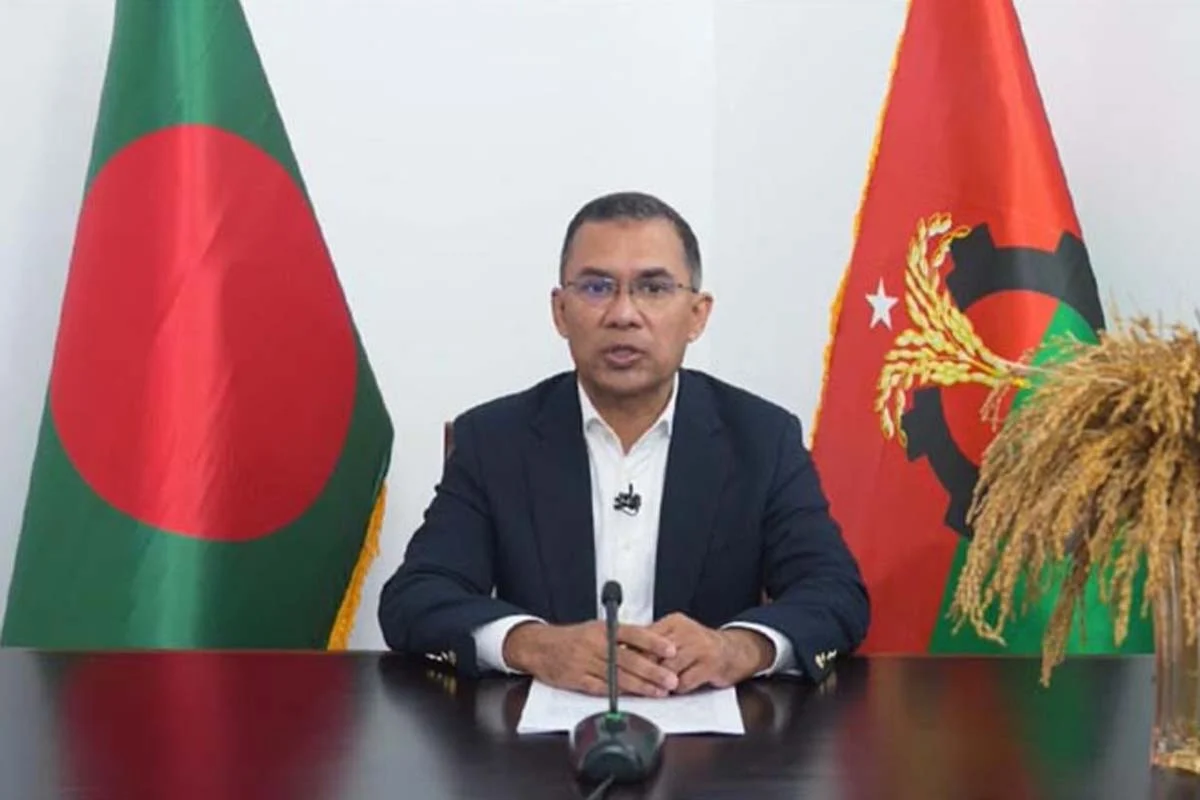
The government formed under the leadership of Tarique Rahman seems to have taken the issue of reducing expenditure into consideration. The initiative to reduce the size of ministries or departments by merging them, and to suspend the purchase of tax-free cars and not to take government plots is commendable, but the appointment of so many advisors, their salaries, allowances, and facilities is against the austerity policy.
Corrupt politicians and bureaucrats divert state resources to unnecessary projects where they can embezzle money. A study conducted in the context of Bangladesh has shown that the state has to waste billions of dollars every year due to corrupt bureaucrats and their inefficiency.
The Asian Development Bank has also expressed almost the same opinion. They say that economic growth is being severely hampered by the diversion of limited state resources to unproductive sectors due to corruption.
A large part of economics and political science is devoted to research on press and media freedom and an independent judiciary. Without press and media freedom and an independent judiciary, it is impossible to prevent corruption. Wider participation of women in the labor market, parliament, and other departments of the state apparatus can help reduce corruption.
The goals of the head of government and other members of the ruling party are usually different. Because the head of government may have a desire to become a statesman or to make a place in history. On the other hand, the goals of others in the party are to make money or to remain in power. This conflict of interest is a major way to prevent corruption.
In this case, effective tools for the head of government, i.e. ways to prevent corruption, are,
1. Make the appointment of the Human Rights Commission, Information Commission, Police Department, Judiciary Department, etc. transparent and impartial;
2. Make the chairman of all parliamentary committees from the opposition party;
3. Make arrangements so that the opposition party, media, police, judiciary, Human Rights Commission, Information Commission can emerge independently with full power.
If these steps are taken, this step will do more important work than the Anti-Corruption Commission. Because, this system will not only prevent corruption of ruling politicians and bureaucrats, but will also work as 'checks and balances' in the state. Because the head of government alone cannot do the job of reining in the ministers, MPs, leaders and workers of his own party. The opposition party and these independent organizations can play the role of watchdogs and rein in the corruption of his own party.
The head of government should have one goal, to keep politics in the hands of pure politicians. Public welfare cannot be maximized if politics is in the hands of the wealthy business class. For example, if the person in charge of setting the minimum wage for workers is a minister or MP, then there will be a conflict of interest and the workers will be deprived of their fair share.
The head of government should have one goal, to keep politics in the hands of pure politicians. If politics is in the hands of the wealthy business class, public welfare cannot be maximized in any way. For example, if the person in charge of determining the minimum wage of workers is a minister, MP is a businessman, then there will be conflict of interest and the workers will be deprived of their fair dues. There are some people in society who have a deep motivation for public welfare, who live for altruism and accept politics as a vow of life. The duty of the head of government is to find them and hand over politics to them.
Politics is now a game of money. Therefore, one cannot be elected without money. In that case, money will have to be provided from the party of these real politicians. The politician will live a simple life and enjoy the joy of serving the country and the devotion received from the people. And the businessman-industrialist will enjoy the joy of living a luxurious life. A citizen will have to choose one of the two. On the other hand, there will be artists, writers, and scholars in various fields.
There has been extensive research on the connection between business and political parties and corruption. From a political perspective, permits, contracts, licenses, and government office operations are bound to hamper economic growth, because the most efficient businesses already in the market may be deprived due to lack of political connections, and those who want to enter the market may not be able to enter at all due to syndicates.
There are great incentives for corporations to associate with political parties. These include benefits provided by the government, such as the ability to buy government-owned industrial enterprises at a low price, easy access to bank loans, relatively low tax burdens or no taxes, and the government ignoring legal obligations in their case. Politicians themselves take a portion of the benefits that businesses associated with political parties reap.
The relationship between corruption and institutions and the state system has been widely discussed in economics and political science. But institutions in Bangladesh are almost destroyed. If we want to prevent corruption, institutions must be made completely independent. In particular, the police, which is a sovereign institution, no longer works in the mind of this country. If the government uses the police for its own interests, the rule of law will never be established. The recruitment process of the police department and investigation agencies must also be transparent and impartial.
To establish the rule of law, it is very important to end the idea that ‘no matter how much wrongdoing we do, we can somehow get away with it’. Not only corrupt government officials and employees, but also any dishonest person in society and businessmen in the private sector who earn money illegally—everyone must be socially ostracized.
The head of government is also a member of society. Therefore, he must also follow the same rules. Those who have committed corruption or crimes in the past cannot be given any state responsibility in any way. If they do, corruption will remain in society and the state—it cannot be prevented in any way.
The Writer is a Professor of Economics at Independent University Bangladesh. He is also an Editor at Large of South Asia Journal.
Unauthorized use or reproduction of The Finance Today content for commercial purposes is strictly prohibited.