Highly Classified Inquiry Report Released After 45 Years
From Circuit House to a Mass Grave: The Untold Journey of Martyred President Ziaur Rahman's Body

The report, prepared by a judicial commission established after the assassination but never officially published, has recently surfaced as a printed copy in media
A long-classified government inquiry into the assassination of Bangladesh's former President Ziaur Rahman has revealed for the first time in detail how his bullet-riddled body disappeared from Chattogram Circuit House following his assassination on 30 May 1981, before being discovered the following day in a makeshift grave outside the city.
The report, prepared by a judicial commission established after the assassination but never officially published, has recently surfaced as a printed copy in media
The findings provide one of the most detailed official accounts yet of the confusion, breakdown of command and institutional paralysis that followed one of the most significant political assassinations in Bangladesh's history.
Twenty Bullet Wounds Documented
According to the commission, an autopsy found 20 separate bullet wounds on the president's body.
The attached post-mortem report described extensive injuries, stating that multiple bullets struck Zia's face, shattering his lower jaw and severing vital structures in his neck. Investigators concluded that the wounds were likely caused by automatic weapon fire from close range.
The report also documented approximately ten gunshot wounds to his chest and abdomen, two to his right arm, one below the navel and several smaller wounds to both legs.
On the morning of 30 May 1981, the president's body remained lying outside Room No. 4 of Chattogram Circuit House after senior government officials had left the premises.
Only two officers from the National Security Intelligence (NSI) agency remained to guard the body.
Military Took Custody of the Body
The commission said the two NSI officers appeared confused and overwhelmed amid the unfolding military rebellion. Around 8:30 a.m., two military jeeps and an army vehicle carrying armed soldiers arrived at the Circuit House.
Three army majors and 10 to 15 soldiers reportedly disarmed the two NSI officers at gunpoint before entering the president's room.The officers were questioned about confidential government documents while soldiers searched the premises.
The commission heard testimony from one of the NSI officers, Assistant Director Abdus Sattar, who said the president's personal belongings were collected and packed into a suitcase.
The report identifies one of the army officers involved as retired Major Md. Mozaffar Hossain.
According to witness testimony, the president's body was first covered with a white bedsheet before being wrapped in another sheet.
The bodies of Lt. Col. Moinul Ahsan and Captain Ashraful Hafiz Khan, who were also killed during the attack, were loaded into the same military vehicle.
The operation took approximately one hour. The three bodies were then transported to an unknown location. Later that afternoon, soldiers returned to collect the president's suitcase.
Authorities Lost Track of the Body
The commission said local civilian authorities had no knowledge of where the president's body had been taken or buried.
After government forces regained control of Chattogram on 1 June, military officers launched a search.
Brigadier Azizul Islam, then Commanding Officer of the East Bengal Regimental Centre, was tasked with locating the president's remains.
Military officials eventually received information suggesting that the body had been buried somewhere along Kaptai Road.
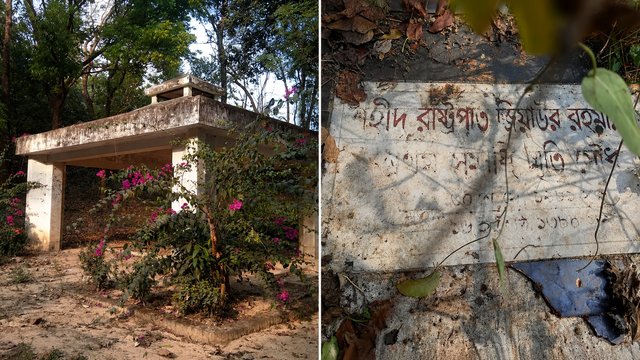 The first burial place of martyred President Ziaur Rahman
A search team that included the president's ADC, Capt. Mazharul Haque, Personal Secretary Lt. Col. Mahfuzur Rahman, Brigadier Hannan Shah, police officers and NSI personnel travelled to Rangunia Upazila. At approximately 9:30 a.m., they discovered a grave on a hillside near Patharghata village.
According to the commission, the bodies of President Ziaur Rahman, Lt. Col. Moinul Ahsan and Captain Ashraful Hafiz Khan had been buried there.
The bodies were later exhumed and transferred to Combined Military Hospital (CMH), Chattogram.
No Clear Orders From Dhaka
One of the commission's central conclusions was that neither the central government nor senior authorities issued clear instructions on securing the president's body following the assassination.
The report says Chattogram was effectively under the control of rebel army units, with key installations—including the radio station, telecommunications facilities and port—occupied by mutinous soldiers.
Under those circumstances, the commission concluded, local officials had neither the authority nor the practical ability to move or protect the body.
The commission found no negligence on the part of local civilian administrators or police.
Instead, it concluded that the absence of direction from Dhaka left officials effectively powerless during the crisis.
Senior Officials Offered No Practical Guidance
The report also examined the actions of senior government and military officials present during the crisis.
According to testimony, then Army Chief acknowledged that securing the president's body had crossed his mind but said suppressing the military rebellion remained the overriding priority.
The then Navy Chief told investigators that no formal request for assistance had been made by the president's personal secretary.
He said his immediate concern was ensuring that naval vessels in Chattogram Port were prepared to leave because they had become vulnerable targets.
Former ministers who were present at the Circuit House also testified before the commission.
The report notes that cabinet discussions in Dhaka focused on the assassination itself but produced no clear decision regarding the recovery or protection of the president's body.
One former home minister reportedly suggested that local officials could have hidden the body somewhere inside Chattogram.
The commission rejected that suggestion, describing it as unrealistic under the prevailing circumstances, when armed rebel forces controlled much of the city.
City Under Siege
The commission concluded that from the morning of 30 May until the early hours of 1 June, Chattogram remained effectively isolated.
With communications cut, military units occupying strategic installations and no operational directives arriving from the capital, local officials adopted what the commission described as a "wait-and-see" approach.
The report says they should not be blamed for failing to remove the president's body from the Circuit House under such extraordinary conditions.
State Funeral in Dhaka
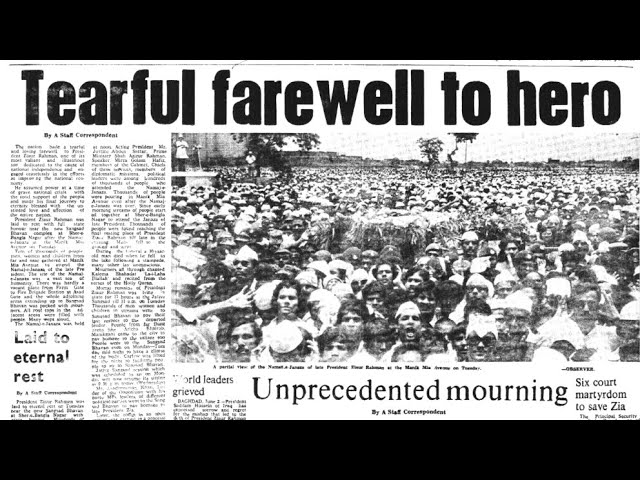
Following the autopsy, President Ziaur Rahman's body was flown to Dhaka aboard a Bangladesh Air Force transport aircraft. The body was taken first to the President's House and later placed in state at the Jatiya Sangsad (National Parliament).
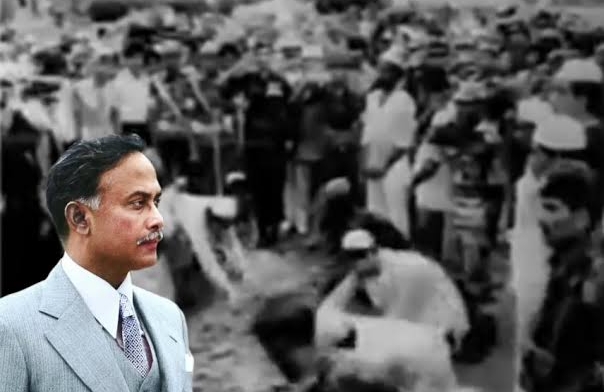
A state funeral prayer was held on 2 June 1981 at Manik Mia Avenue, attended by a large public gathering. He was later buried at Chandrima Udyan in Dhaka, where his mausoleum now stands.
The commission records that as the coffin was lowered into the grave, honour guards from Bangladesh's three armed services stood in ceremonial formation while military buglers played the "Last Post." The chiefs of the armed forces paid their final salute before thousands of mourners bid farewell to the assassinated president.
The report, released 45 years after the assassination, offers one of the most comprehensive official reconstructions to date of the events that unfolded between President Ziaur Rahman's assassination at Chattogram Circuit House and the recovery of his body from a clandestine burial site, shedding new light on a pivotal chapter in Bangladesh's political history.
Shamiur Rahman