Barriers to Information Access
Threats to Journalists: Calls for Safety and Press Freedom
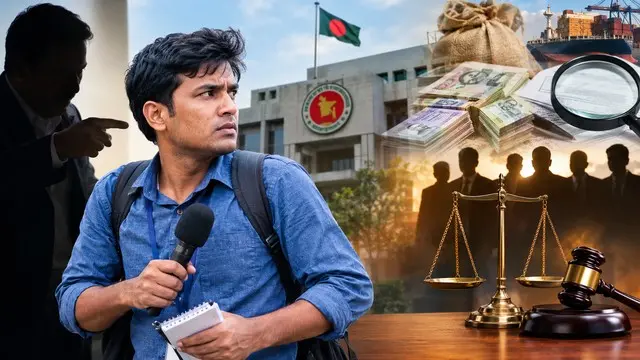
Media scrutiny vital to curbing corruption and irregularities in the revenue sector
In a society where those in power feel uncomfortable when journalists ask questions, attempts to conceal the truth are likely to increase. When questions are met with humiliation, threats or even bullets, the public’s right to know is undermined, accountability is weakened and the space for democracy shrinks. Journalists may be silenced temporarily through intimidation, but such tactics neither erase wrongdoing nor diminish the public interest in the truth.
Corruption, irregularities and abuse of power have become deeply entrenched in various layers of society. Corrupt officials operating within the administration are damaging the government’s image and obstructing the country’s overall development. In this context, independent media scrutiny can play a crucial role in protecting the broader interests of the country and preventing corruption in the revenue sector.
Investigative journalism can help identify potential irregularities in income tax, value-added tax (VAT), customs and bonded warehouse management. It can expose possible losses to the public exchequer and help ensure accountability among the authorities concerned. However, difficulties in obtaining information, pressure from influential quarters, legal harassment and security risks remain significant obstacles to this work.
A journalist’s responsibility is not to praise those in power. It is to investigate facts, identify inconsistencies, raise questions about irregularities and report the truth in the public interest. A report may affect someone's interests, and a question may make an official or influential individual uncomfortable. But using such discomfort as a reason to demean journalists or discredit the entire profession is deeply concerning.
One of the biggest challenges facing investigative journalism is obtaining relevant documents and analysing complex tax and customs regulations. Journalists investigating influential individuals or organisations may also face legal notices, defamation cases, professional pressure and threats to their safety. Ensuring access to information, editorial independence and professional security is therefore essential.
Restrictions on Access to Revenue Offices
Journalists investigating allegations of corruption and irregularities have reportedly faced tighter restrictions on entering various offices of the National Board of Revenue (NBR). Investigative journalists sometimes visit public and private offices discreetly to verify information and gather evidence.
However, any such reporting must comply with applicable laws and legitimate security requirements. Neither official permission nor access restrictions should be used to obstruct lawful newsgathering or conceal matters of public interest.
Recently, a video clip circulated widely on social media, apparently showing a journalist being confronted and harassed by an influential bond commissioner. In the footage, the official is seen subjecting the journalist to a barrage of questions and allegedly using the authority of his position, along with references to senior officials of the Department of Mass Communication, to intimidate the journalist.
If the footage accurately depicts the incident, it raises serious concerns about the treatment of journalists and the exercise of official authority. Public officials have a duty to respond to legitimate questions professionally and transparently. Intimidation is not an acceptable substitute for accountability.
Past experience has shown that confrontations between public officials and the media can have serious consequences for public trust. Journalists must be able to carry out their professional duties without fear. At the same time, some self-proclaimed journalists spread misleading information through various platforms without adequate evidence. Such practices must be addressed firmly.
Press freedom does not mean freedom from professional standards. Preventing misinformation and unethical reporting is important, but these objectives cannot justify blanket restrictions on journalists. Government offices, particularly those responsible for public funds and revenue collection, should maintain transparent and reasonable access arrangements that allow journalists to investigate matters of public interest.
Press Freedom, With Accountability
Everyone has the right to criticise journalists. Journalists, too, are subject to the law. If a journalist engages in unethical or unlawful conduct, appropriate action should be taken through due process. However, holding an entire profession responsible for the misconduct of an individual is unjust, just as using journalistic credentials to commit wrongdoing is unacceptable.
Professional freedom and accountability are inseparable. Credible journalism requires accurate information, independent verification, fair reporting and a willingness to correct mistakes. Equally, any action taken against journalists must be based on evidence and lawful procedures rather than retaliation for critical reporting.
Impunity in cases involving attacks, threats or killings of journalists can embolden perpetrators. The consequences extend beyond the media: information about corruption, administrative irregularities and abuse of power may remain concealed. Citizens may consequently be deprived of essential information about public services, local administration and the activities of influential individuals.
Journalists’ safety is not a special privilege for a particular profession. It is an integral part of upholding the rule of law and protecting citizens’ right to information. The state must take effective measures to safeguard journalists, promptly investigate allegations of attacks and bring those responsible to justice, regardless of their identity, position or influence.
Journalist organisations also have a responsibility to uphold professional unity, ethics and accountability. Verifying information before publication, seeking comments from the parties concerned and avoiding personal attacks are essential to maintaining public confidence. Professional integrity remains one of the strongest safeguards of press freedom.
Government agencies and relevant authorities must recognise that treating the media as an adversary does not resolve public-interest concerns. Trust is built through fact-based communication, transparent handling of complaints and effective action against proven irregularities.
Curbing Revenue Corruption
Allegations of revenue-related misconduct include tax evasion, under-invoicing of imported goods, misuse of Harmonized System (HS) codes, VAT evasion and abuse of duty-free bonded warehouse facilities. Investigating such allegations requires careful examination of import and export documents, audit reports, official accounts and statements from the organisations concerned.
The existence of an allegation or a risk of irregularity does not, by itself, establish guilt. Investigative reports must distinguish clearly between suspected wrongdoing, findings of an investigation, formally assessed liabilities and amounts actually recovered.
When reporting on revenue losses, journalists should separately identify the amount of suspected or detected revenue leakage, the amount finally assessed by the relevant authorities and the amount recovered in practice. These figures are not interchangeable. Regular follow-up on investigations, legal proceedings and outstanding revenue claims can help strengthen institutional accountability.
Transparency in revenue administration also requires effective audits, improved digital systems, the regular publication of relevant statistics and timely disclosure of progress in resolving complaints. Where applicable, the Right to Information Act, 2009, can provide journalists with a legal avenue to obtain public information, subject to the law’s provisions and exemptions.
The media, however, must exercise professional caution when exposing corruption. Allegations should be verified, information cross-checked against multiple reliable sources and the individuals or organisations concerned given a fair opportunity to respond. A clear distinction between allegations and established facts is essential to preserving credibility.
Preventing corruption in the revenue sector is not the responsibility of the media alone. It requires impartial investigations, proper enforcement of the law and effective administrative accountability. Evidence-based reporting, protection for journalists and sustained monitoring of the outcome of published investigations can work together to improve transparency and accountability.
Protecting Journalists, Defending the Public’s Right to Know
A journalist can be humiliated to discourage questions, and a journalist’s life can be taken by a bullet. But neither intimidation nor violence can eliminate society’s need for the truth.
When a society fails to protect the right to report the truth, standing up against corruption and abuse of power becomes increasingly difficult. Protecting journalists’ dignity, ensuring freedom of expression and bringing perpetrators to justice are not demands made by one professional group alone. They are essential conditions for building a just, transparent and accountable society.
Shamiur Rahman