JMS Garments accused of Tk 585cr revenue evasion
Bonded raw materials worth Tk 633 crore allegedly missing ⊕ Customs audit finds massive shortage of fabrics, accessories and packaging materials
JMS Garments Limited, a 100% export-oriented apparel manufacturer located in Chattogram Export Processing Zone (CEPZ), has been accused of removing a massive quantity of duty-free raw materials imported under the bonded warehouse facility without customs approval.
An audit report prepared by the Chattogram Customs Bond Commissionerate’s CEPZ division has found alleged revenue evasion amounting to Tk 585.32 crore, involving raw materials that could not be accounted for during a physical inspection of the factory.
According to the audit report, customs officials were supposed to find 13.98 million kilograms of raw materials in the company’s warehouse. However, only 282,808 kilograms were found during the inspection.
The missing materials include fabrics, accessories and packaging materials imported under bond facilities, raising serious questions about the use and disposal of duty-free inputs.
Huge Bonded Stock Shortage
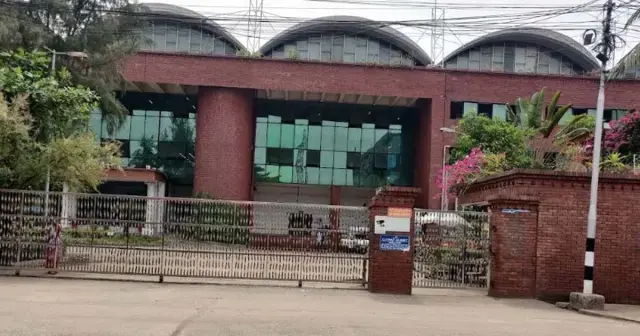
The customs audit team conducted a physical inspection of JMS Garments’ factory in Sector 6 of CEPZ on July 5 and found that the company’s operations were currently closed.
According to the audit findings, 87.54 lakh kilograms of fabric were unaccounted for. The estimated value of the missing fabrics is around US$38 crore, against which applicable customs duties and taxes amount to approximately Tk 482.52 crore.
Another 51.59 lakh kilograms of accessories, valued at around US$7.4 crore, were also found missing. The corresponding customs duty and taxes were calculated at approximately Tk 101.97 crore.
In addition, around 67,006 kilograms of packaging materials were unaccounted for, resulting in an estimated revenue liability of Tk 82.66 lakh.
Taken together, the audit estimated the total customs duty and taxes payable on the unaccounted raw materials at Tk 585,32,17,391.42.
Bonded Stock Missing After Closure
According to the audit report, JMS Garments was granted its bonded warehouse licence in 2000. The company’s chairman is Humayara Shams and managing director is Mustafa Mahmud. Foreign directors listed in company documents include Stephen Vujingk and Nagai Fung Chan.
The 100% export-oriented garment factory was formally declared closed on May 19, 2025.
The audit report indicates that a substantial quantity of bonded raw materials could not be accounted for after the closure.
JMS Garments mainly produced and exported knitwear products, including T-shirts, polo shirts, sweaters and children’s clothing.
The company imported fabrics, accessories and packaging materials under bond facilities from China, Hong Kong, Indonesia, Thailand, India and Sri Lanka. Its finished products were exported to markets including Canada, Germany, India and the United States.
Although the company’s audit had been completed up to 2022, no audit was conducted from 2023 onward until the latest inspection.
The Chattogram Customs Bond Commissionerate subsequently initiated an audit covering the period from January 1, 2023 to July 5, 2026. The audit examined the company’s import records, export data and bonded warehouse documents.
Import-export records raise questions
The audit report says JMS Garments imported 13.30 million kilograms of raw materials through 1,026 bills of entry in 2023.
Of those materials, approximately 1.59 million kilograms were used to manufacture garments, which were subsequently exported.
In 2024, the company imported approximately 16.99 million kilograms of raw materials through 1,027 bills of entry. Of these, around 1.90 million kilograms were reportedly used for garment production and exports.
In 2025, the company imported approximately 14.63 million kilograms of raw materials through 136 bills of entry. Only around 266,725 kilograms were recorded as having been used to manufacture garments for export.
Overall, customs officials found 13,979 metric tonnes of bonded raw materials unaccounted for.
Of this amount, approximately:
-
8,753 metric tonnes were fabrics;
-
5,159 metric tonnes were accessories; and
-
67 metric tonnes were packaging materials.
The customs audit estimated the assessable value of these 13,979 metric tonnes of raw materials at approximately Tk 633.66 crore, against which the applicable customs duties and taxes stood at Tk 585.32 crore.
Bank liability also crosses Tk 100 crore
The audit report also raises concerns about JMS Garments’ outstanding bank liabilities.
According to the report, the company failed to complete exports and repay its bank liabilities, resulting in a forced loan of Tk 117.94 crore with its lien bank, EXIM Bank Limited.
The audit team noted that such financial irregularities involving a bonded facility user could pose additional risks to the banking sector.
JMS Garments had previously faced a case involving alleged evasion of Tk 35.40 lakh in customs duties over the unauthorised removal of bonded raw materials.
Although the company subsequently deposited the disputed amount, it challenged the customs authority’s action before the High Court. The case remains pending, according to the audit report.
The report further noted that under existing law, customs authorities may freeze the company’s bank accounts or seize its assets to recover outstanding government dues. However, no such measures have so far been taken.
Show-cause notice recommended
The customs audit team has recommended immediate action against those responsible.
The report, signed by Assistant Revenue Officer Prabir Nath, Revenue Officer Sarwar Alam and Joint Commissioner Anupam Chakma, recommended issuing a show-cause notice to JMS Garments and initiating the process to recover approximately Tk 585 crore in government revenue.
The recommendations came after customs officials found a substantial discrepancy between the quantity of bonded raw materials recorded in the company’s documents and the quantity physically available at the factory.
JMS Garments denies the allegations
JMS Garments Managing Director Mustafa Mahmud denied knowledge of the audit when contacted.
He initially said, “We are not aware that an audit has been conducted. I will let you know after finding out.” He also claimed that the company had not submitted any documents during the audit.
He did not respond to subsequent calls seeking further comment.
Later, Mahbub Hasan, the company’s manager for human resource management, said all the fabrics and accessories were still inside the factory.
He claimed that the company had been unable to export the goods because of complications and that the materials had not been sold on the open market.
According to him, “There are errors in the bonded records.”
Other JMS units under scrutiny
An NBR official, speaking on condition of anonymity, alleged that JMS Garments had sold a large quantity of bonded raw materials on the open market.
The official said action would be taken against the company over the alleged misuse of bonded facilities.
The official also said another garment factory owned by the same group, Modist International, located in Sector 7 of CEPZ, had also been found involved in the alleged sale of bonded raw materials.
Another factory owned by the group, Modist Bangladesh, is located in the Faujdarhat Heavy Industrial Area along Sagarika Road in Chattogram.
According to the official, the group’s companies have been placed under close scrutiny over alleged misuse of bonded facilities.
The Missing Bonded Materials
The audit findings have raised a fundamental question: How did nearly 14,000 tonnes of duty-free raw materials imported under the bonded facility disappear from the factory’s records and warehouse, and who was responsible?
For a bonded garment factory, duty-free imported inputs are intended for use in manufacturing export products and are subject to strict customs controls. Any unauthorised removal, diversion or sale can expose the government to significant revenue losses.
With the customs audit now identifying an alleged Tk 585 crore revenue liability, attention is turning to the next steps by the customs authorities.
The key questions are whether the missing raw materials were illegally diverted or sold, who authorised or facilitated their removal, and whether any officials or other parties were involved.
The outcome of the customs proceedings and any subsequent legal action will determine the extent of liability and the amount of revenue ultimately recoverable by the government.
Shamiur Rahman